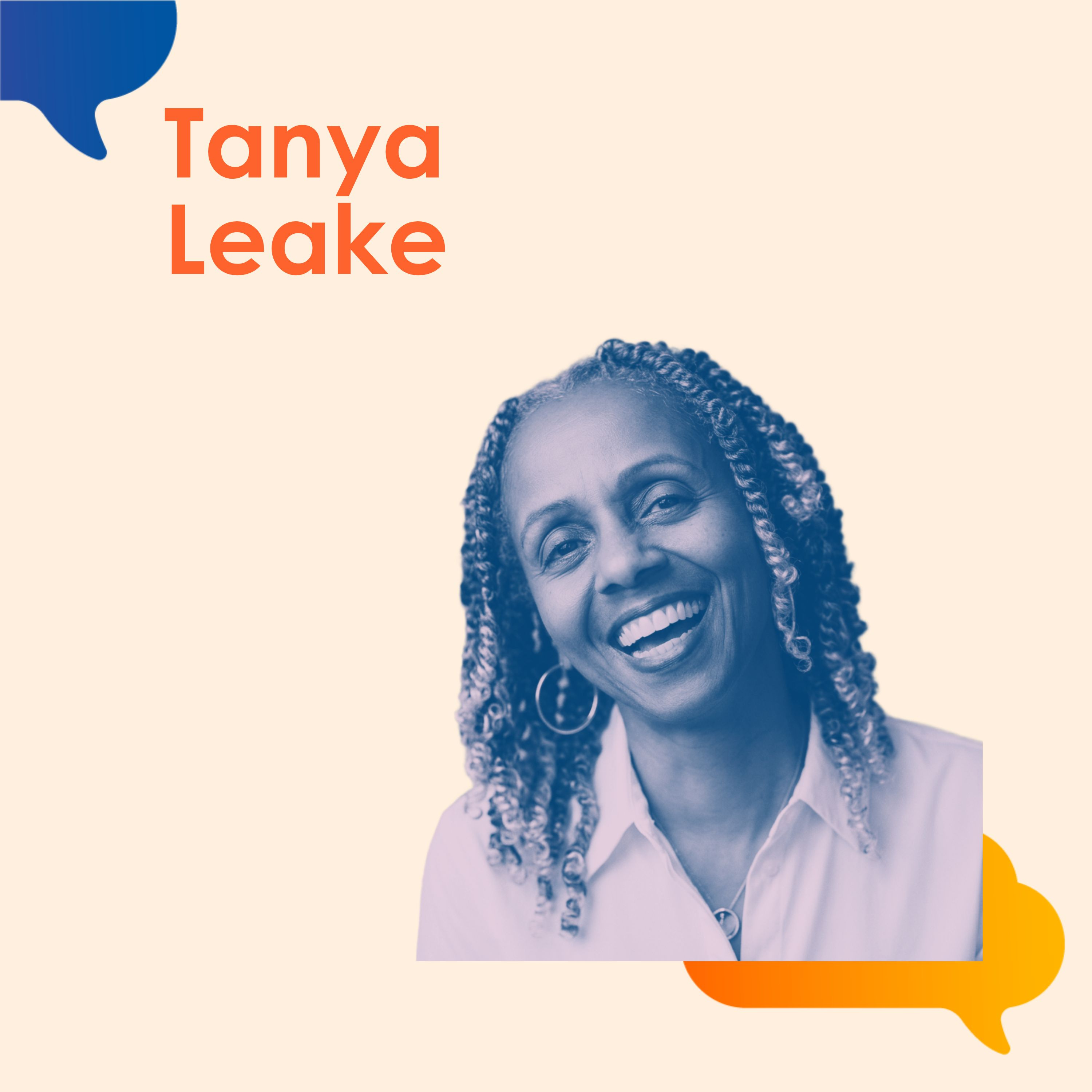
Aging Well Has Less to Do with Your Body Than You Think - Tanya Leake
About This Episode
Episode 2 of the series “Aging, According to Everyone Else”
We tend to think of aging as something physical — changes in how we look, how we move, how our body feels.
But what if the bigger shift isn’t happening in your body… but happening in your mind?
In this episode, I mind-blended with Tanya Leake, a health and wellness coach who takes an age-positive approach to aging — one that focuses less on resisting change and more on understanding how we relate to it.
We explore how much of our experience of aging is shaped by internal narratives, external messaging, and the subtle ways we respond to change.
- The hidden beliefs behind phrases like “you look great for your age”
- What actually improves with age — and why we don’t talk about it enough
- The difference between tracking what drains you vs. what energizes you
- How community and environment influence how we age
- And why resisting aging might be the very thing holding you back
If you’re saddened by the changes in your body as you age, this one’s for you.
About Tanya Leake
Tanya is a National Board-Certified Health & Wellness Coach, Board-Certified Patient Advocate, and mindset and lifestyle facilitator. Her work reframes aging, and menopause in particular, from decline to identity evolution. A fierce opponent of the term “anti-aging,” she supports clients in moving toward what she calls an Age+ mindset: shifting toward honoring the clock instead of trying to stop it or turn it back. Drawing on longitudinal research on aging and the influence of mindset and beliefs, Tanya bridges theory and practice to show how our beliefs about aging shape physical, emotional, relational and existential health.
She focuses on addressing the often-overlooked existential (identity and purpose) dimension of aging and equipping clients with research-backed lifestyle strategies to support their longevity goals, with a focus on mindset and reframing. Her central message is simple: “Aging starts the day we are born. By fighting aging, we are fighting moving forward, growing and becoming. Age+ is about choosing to celebrate life itself in every season of change it brings.”
You can connect with Tanya on https://embodywell.com/, YouTube EmBodywell, Instagram embodywell
Here are some of the researches she’d like to share.
- Americans in Their 80s and 90s Are Redefining Old Age
- People think ‘old age’ starts later than it used to, study finds
- Embracing Resilience: A New Perspective on Aging
- Why you should thank your aging brain
- Believing Myths About Aging Makes Growing Old Worse
- Ageism: The Brain Strikes Back
- Scientists discover a key to staying mentally sharp in old age
Mind Blend is all about real experiences and meaningful conversations—through sharing these insights, I hope to inspire and empower you as you navigate your unique journey.
What resonated with you today? What topics or guests should we feature next? Let’s keep the conversation going—connect with me on LinkedIn @Mind-Blend, Instagram Mindblendpodcast or mindblendpodcast [@] gmail.com.
Follow Mind Blend to get notified when new episodes are released!
0:00 And I will say the other thing that I say when I really wanted just be blunt is because of the fact that we're aging from the time we're born. If you were anti aging, you're pro def because that's the that's the only way you stop aging. The best thing to do is to actually just enjoy your life. You can spend most of your time fighting it. Yeah. Just honor the fact that you've come this far. You have this wonderful set of experience opening up new genes that you have this wisdom that you have a lot of times in the in the opportunity space that we have people that we know that we've known for years that we can share information with that.
0:40 So in the last episode I talked with Mary Westheimer about aging from the point of view. I've been there, I've done this. Today I'm exploring more about this topic from more angles with my guests. Tanya Lee. Tanya is a certified health and Wellness coach, mindset and lifestyle facilitator. She's the founder of a company called Embody Well. She focuses on research backed lifestyle strategies and what she calls an age positive approach, looking at ageing not as something to resist but something we can meet with intention and a deeper understanding of who we are.
1:18 Welcome to mind blend. I'm your host Karen Chong. In each episode I talk with people who've experienced something real and we breakdown what made the difference so you can see yourself and the world around you more clearly, spot what you might have been missing and move through life with a clearer way forward. If you like what you're hearing, share with those around you and subscribe to Mind Blend. You'll help a lot in spreading the insights for anyone who can use them. Let's blend. Hi Tanya, welcome to Mine Blend.
1:50 Hi, I am so pleased to be here. Thank you for that, Karen. Thank you for being here. Now the topic of aging. Usually someone don't. They don't think about it until they see some changes. It can be changes in their body, changes in their appearances, in the way they think of themselves. How did that look like to you?
2:15 Oh, I think you are absolutely on point when you say that. It's the changes that start to create the ripple of of thoughts and, and, and when we talk about, we'll talk about some practical tips, the changes and how society perceives them largely, which most of us have internalized is where that that beginning of a certain mindset and a certain set of beliefs around what those changes mean starts. So for me, that's when I as, as, as someone who does consider themself self aware, I started to realize I have some, some very interesting internal beliefs about what these changes mean, right?
3:10 About maybe, maybe a little extra line here or there, right? What does that mean? As you can see, my hair is Gray. So what, what does that mean in society and how is it perceived? And so I, I really started grappling with this myself as I was experiencing these changes that I linked to certain beliefs that I knew were coming from somewhere else because I, I, if you asked me how I feel right now, it's probably 20 plus years younger than my, you know, as, as billed age. Yeah, your ID so. Yes, my, yes.
3:50 So I know everyone's talking about your biological age and all those things as we do this, all this hacking and you know, so I, I honestly feel as if, yes, I started to, it really examined just as a coach, how I was thinking about it. And and then also talking to some clients which we can we can, I can give you some some examples in a moment. So you mentioned you saw something and then it there's these messages, these beliefs. Can you tell us a few more of these beliefs? Yeah, I mean, I, I think that so I'll, I'll give you an example.
4:31 I, I think we had spoken about this in my Facebook post When? So in November of 2025, I turned 55 and it's kind of I felt like it was a golden moment. I have a couple of friends. We talk about the each each decade as the floor. So I'm on the 5th floor now and, and the higher you go, the better the view is. That's the way that we think about it. So, so I, I was, people would say, you know, you look great for your age. And I just, I, I was, I, as I was thinking about that, I said, what does that mean?
5:15 What does it mean? I mean, if you look great, you look great. And, and this concept of for your age, I, and I am one of those people because I'm a mindset lifestyle coach. I think about the words that I'm using, the words that others are using, the words that I'm how, how I'm perceiving it. And I just thought about that just means that we, we have this leaning this, this sort of implicit leaning towards, OK, well, yes, this is, this is this age, but it's, it's not great to be that age. You want to be something lower.
5:51 And, and so, so, but yeah, if you want to talk specifics, you know, I noticed some lines on my forehead. I don't remember when it was, it was in the last year. And and I remember going. They were not there before. These are new and I, again, I had to think about it. And I have to say, I, I, I've been blessed with longevity, my family, I all of my particularly on my father's side, they've all lived well into their 90s, couple into their hundreds. And I was just thinking about how much I adored them and their wisdom and what they brought.
6:36 And so I in my way of reframing, I'm just like, OK, this is me becoming wise like they were.
6:47 But it was a, it was a conscious shift. It was a conscious shift from, Oh my goodness to OK, this is, this can actually be a positive. How can I reframe this as a, as, as a positive? And that's, that's where this, this work kind of began. There were other things, you know, and, and I do menopause coaching as well, because that's all part of particularly for women who's going through this, this process and, you know, body composition changes. So things were changing in my body. And I, you know, I've been a fitness professional, I've been a dancer for years.
7:28 And so there was, and this is this is where it really was brought home for me, is that as a dancer, I think 1 there's some challenges already as a dancer, you have a certain sort of standard body type, body size you want to be. And then when these changes start happening, it it, it your identity is, is stretched. Yeah, I'm going to use the word stretched. You can say challenged as well. And so for me, there were those things also, which is same, same level of movement, constant activity, etcetera.
8:05 But my body was changing in these ways that I was I was grappling with. Now, because you are a mindset coach, you are maybe more comfortable, you know, intentionally setting your mindset. Yeah. But I'm sure you have had clients who's theoretically they understand that but are like struggling to do what helps them. Like how how, how do you help them tackle this? Yeah. I mean, we start with, I tend to come from an, an additive perspective as opposed to a let's figure out how we can take stuff away.
8:44 So, so shifting the focus, right? It's, it's, that's, that's kind of what a reframe is. Some people think of reframes as this sort of toxic positivity And, and it's not, right. It's really about, I mean, it's, it's the glass half full. The glass is both half full and half empty. It's what you choose to focus on. So, so part of what I suggest is first is just noticing, noticing. And you ask me the question, what is it that seems to trigger certain thoughts, certain emotions for you? And let's just, let's just observe those things and and observe them with compassion.
9:26 And grace. And and not follow them down 'cause they can go down a little bit of a rabbit hole, which is where a lot of the things that you're talking about start. So first it's just observing. It's just observing when, when am I in these spaces? And then, and so that's, that's one of the things is to just start to understand your own inner process as it relates to what, what am I thinking about this? What I also encourage is, you know, as you're looking at what external things are, who are the people that you can?
9:59 So I have my aunts. I, I adored them, I revered them. I respected them so immensely. And so who are the, the models for? You know, I, I assume that the person from that you last interviewed can be a model for hey, this is how this can be, this can be very exciting. This could be. And, and we're seeing more of that. And I, I, I could talk about some of that, that research that's out there, right? There's research that says that the age, the, the true age that we see as old has, has gone up since, you know, I don't know when they first started measuring it early in the, in the, you know, 20th century.
10:43 So, so we perceive old as a, as a different age and that's going up because we see now more people in their 50s, in their 60s, in their 70s and there's active and they're vibrant and they're doing all of these things. So, so as we look for those role models and those examples that we can look to and kind of, you know, maybe allow focusing on that to to shift our focus from what may have been, you know, a more a more challenging sort of mindset and point of view. Yeah, I'd like to dive into this, the research a little bit.
11:15 Like we have all heard of the, you know, 30, what, 30 is a new 20. Like you can just keep going, like 70 is a new 60, maybe even 55 now. What are some of the research show Like is it the ability to do something now we can do it until we're an older age? Like what are some of those? Well, OK, so, so the, the, the research is largely around mindset, which is really exciting for me, right? Because it has to do with what you believe. Now for those of you who are devotees of, I don't know if you've heard of Carol Dweck and growth and fixed mindset right there.
11:53 There's, I mean, even she talks about fixed mindset has a place. I am not now or nor will I ever or in the past going to challenge LeBron James to a game of basketball and beat him. So my growth mindset has a a limit has a limit, yes. Now, having said that, you know, the research shows that one, as our brains sort of reorganize again with age, our bodies are remarkably resilient, that we have access to ways of thinking that we cannot have. And there's certain genes that turn on with experience, right?
12:40 So we don't talk, we don't talk about these things. It's all of these things that we can actually look towards and and so we can think about things in these new ways. I mean they included things like this sort of our relativistic thinking. So we can sort of understand that that there when I was 20, it was black or white, it was this is this or this. You're old or you're. Now we, we know that there's, there's a lot of Gray, there's a lot of Gray and there's, there's actually power in that Gray. And I, I say that and I'm like, oh, now that's a quote.
13:16 I could say there's power in the. Gray. It's my Gray hair. Yeah. But then also in this Gray and so we have this sort of non dualistic thinking that we can access and that actually allows us to bring new creativity, new ideas. And then it it added to that. There's also studies that show that as we get older, we, we can mostly because we know it's related to some of the things I was just talking about with the relativistic thinking. But we also know that we don't sweat the small stuff as much. And so it, that allows us to be more resilient because we're like, I, I'm not going to even worry about that.
13:56 And we're able to do that more than someone younger. So there are these benefits. Well, even for like health tracking apps, they have a health age and your real age based on your vitals. Now, what are some of the things that we should be tracking? But like our health metrics aren't really tracking because usually it's the your like VO2, your weights, your heights. What would you wish that they can track more? Oh, oh, gosh, that would that, that's, that's a wonderful kind of open the space question.
14:34 I well, first, when we talk about very specific physical health metrics, because that's, I mean, also it's largely what the technology can monitor. Some of our mindset stuff is a little, a little harder. One of the things that is one of the biggest determination of or indicators of health is waist size. Waist size. OK, yes. A lot of people are focused on their weight and I always say focus on your waist because the the research has shown that it's a much better indicator than BMI, which of course is concerned with your weight and your height and all that stuff.
15:11 But your waist or your waist to hip ratio, because it is a known factor that there are different body types, right? You've got who carry more weight in their trunk. They tend to carry more particularly the number one killer heart disease, particularly cardiovascular risk is in sort of our expanding waist lines. So I'm going to tell you one of the little things that I do, OK, this is my little my little secret. So I there's also research that says that when you move after you eat, particularly within that immediate half hour after you eat, they've studied mostly walking.
15:51 It helps with maintaining sort of stable blood sugar. I hula hoop wow for 15 minutes after I eat. So that's 1-2 if if they could. And this is where I don't think the tech is really available to it. I know that, you know, there's, there's measurements around sleep, which I am a big advocate of in terms of getting contiguous quality sleep. You know, some people will say, oh, I got 4 hours here and four hours here. That's, that's not the same. That's just be clear, that's not the same as 8 hours. So, so I know that a lot of them measure sleep.
16:34 So I, I am, I endorse that, I will say, because I think that that is also one of the underappreciated mechanisms by which we allow our bodies to recover. And it helps rejuvenate. Yes, I would say in, in sort of a mindset way that there are many ways to rejuvenate, right. There's the body sort of physical, all of the skin cells kind of replicating and, and, and then there's this, this element of almost energetic rejuvenation. And that's where age positive comes in, because the the concept of age positive is that it's at any age because you start aging from the time that you leave your mother's.
17:21 You're born. So when we talk about aging, it's often just this later stage and it's just no, you are constantly. So you want to squeeze the juice of every era, every year, every moment, right? It is the the definition of mindfulness, right? And we constantly talk about the benefits of mindfulness. So yeah, this concept, I love using rejuvenation because what is it that energizes you, right? When you think about your vitality, what's the source of that? And, and again, this is shifting the focus.
17:57 It's not about what, what's draining me today. What's what, what is that source of rejuvenation as you just said? And how can I tap into that more often when I need it? Yeah, So that's, that's the question. And and it's going to be different. It's going to be different because of, to be honest, what's going on for you physically over the course of your life, but also just your, your general environmental context, who's around you, the relationships that you're in, you know, the, the, whether you're in London or you're in San Francisco, you know, so.
18:33 The context. The context so you want to I mean that's, that's the other thing that I, I wish it could help you measure and maybe the aura ring or other if it could measure when you're excited, when you when your energy is up in this way that is really enhancing for your body. So let's figure that out 'cause we often the the trackers often focus on stress what we. Are stress right now it tells me that. What is what is debilitating you? I don't, I, I want to move towards the rejuvenation. I want to move towards the energy, the vitality.
19:14 So how could we measure those types of things and and flag those so that you can in that moment, like, Oh yeah. And that's when we should be our own tracker. Like we, like you said in the very, very beginning, you start with noticing and then if you notice, make note of it and then you observe how you react. Now let's talk about reacting. And we live in a world that is we're constantly bombarded by anti aging this and that, turning back the clock. And there's something that I really like that you said, honoring the clock instead of trying to stop it or turning it back.
19:58 I really love that because and this reminded me of a comedy skit. It's by Shang Wang, I think, he said. So you see all these commercial about anti aging, who's aging? Like, why is everyone so anti this person called aging? So I thought it's like, which is a silly joke, but I thought it was really timely. Like yeah, like I just came back from a trip from Asia and especially when it comes to Asia, if you don't fit a certain look that is not considered beautiful or like the window is a lot smaller, how can someone help them self battle these messages?
20:39 Yeah, I, well, first I'm going to say you are constantly bombarded by these messages because they are so common. And it sounds like cross cultures, right? Because I born and raised in the US, travelled extensively. But yeah, it's, it's it's pretty pervasive. So it's hard. So I just want to, I just want to put that out there that this is not, we're not saying that. I'm certainly not saying that. OK, well all you have to do is this and it's really easy since you are bombarded externally, you have to have your almost shield, part of your shield.
21:20 And I tend to think of it as my tribe. My tribe are all people that are like minded in that we we resist that and we lean into what we love to do. So there are others who think like me. So find those people. Some people will tell you to hang out with a diverse group of ages. So you're not constantly sort of with people who are maybe sort of thinking the way that you are trying to. Get away from. Yes. So I encourage you to find that tribe. I'm gonna tell you about 1:00 reminder I just got from a friend a sub stack.
22:07 So she she mentioned clock blockers. Clock blockers. OK, and and she actually, I told her, I said, Oh my God, this is fantastic for this whole age positive, you know, thing that I'm on. And she said I I entirely did not intend it that way. She meant time wasters, you know, clock blockers. And I was like, no, it's people who are to what you said, they're blocking the clock. They're not honoring it. They're just, they're just trying to stop it. And, and I so, so, so now one of the things that I think about when I hear stuff or even if I have an internal thing is clock blockers.
22:47 And I it, it just kind of sort of changes my, my, where, where my head is. It's hard. It is easier when you pay attention and if you practice paying attention and shifting the narrative. Yeah, 'cause what you tell yourself it becomes true. Like when you are constantly thinking that you're old, you do look older, or you're it looks like you have this cloud over you. There are so many things that when we put our mind to it and, and actually think that we can find that are just wonderful things in our lives.
23:30 So thinking about what's the gift in today as opposed to what's the, I mean, people talk about it with gratitude journals. This is exactly the same thing. What are you grateful for and why? What has it brought to you life? The other thing I, I tell people is to have something in the next month. I usually try to use the next month 'cause you know, it's, it's always can be a challenge and, and the week, but to have something that you are looking forward to that you have that you can anticipate because, and I'm, I'm actually looking for research around this, right.
24:04 I saw some information about the, the power of awe. So just being in awe of, of things. And I think that similar to that, there's this concept of sort of excitement and anticipation that you have around something that you know you're going to do that you know you're going to enjoy. And if you can plant those seeds every month in your calendar, in your mind, that's, that's why you start building this, this era of thriving whenever you're there. So, so I think, I think what, what happens is that, and, and I encourage even from your teens, your 20's, the time you become mentally aware, it's to start thinking about the things that, that, that give you that emotional mental boost, not, not just the physical, right.
25:06 Because there's so much power in that. You want to move your body, that our bodies were designed, you know, you don't you, you don't use it, you lose it. But similarly, if you're not using your brain and, and our brains light up for really, really, really positive things and really, really, really like strong emotions. We have brain chemicals releasing for really, really happy and really, really. And those things really create those neural pathways. And so the more we can because, because the negative has a lot of stuff associated with it that it we're not interested in the positive has so many things that can bring us to some basically some new levels, right as we go to each new floor, as we're talking about and the view is getting better.
25:57 So, so yeah, so I, I think we have a lot of lot of metaphors we've been putting out here, but I, but I love it because that's that's what age positive is about. Age positive is about this concept of having these ways in which we could see the world metaphor that is different than what we're seeing. And I will say the other thing that I say when I really want to just be blunt is because of the fact that we're aging from the time we're born, If you were anti aging, you're pro def because that's the that's the only way you stop aging.
26:28 That is the only way you stop aging. So all these things you're trying to do, appreciate it. The best thing to do is to actually just enjoy your life. You can spend most of your time fighting it. Yeah. Just honor the fact that you've come this far. You have this wonderful set of experience opening up new genes, that you have this wisdom that you have a lot of times in the in the opportunity space that we have people that we know, that we've known for years that we can share information with. That's actually, I don't know if you're aware of the Counterclockwise study by Ellen Langer, so author of The Mindful Body, Ellen Langer, one of my one of my favorite sort of health psychologists, she's up there with Kelly Mcgonigal.
27:16 She did a study in 1979. The study was based on taking a small group of men into a monastery, which she outfitted as if it was 1959. From the magazines to the appliances to the and any pictures that were in the in their rooms, etcetera were only until 1959. They had no pictures from after that. So in the 20 years after that, so and they're men in their 70s and 80s. So this is basically no pictures beyond when they were in their 50s or 60s. They spent a certain amount of time and so they were treated as if they were very able bodied etcetera.
27:56 And so they actually showed great change in their bodies from their posture to their eyesight to. So it was, it was really, really. Amazing oh I I understand 'cause they think they are 20 years younger the. Newspapers, etcetera were from that time. So they're actively discussing sports events, things that are happening as if they are current and their cells believed it, right. They actually started to believe it. And, and one of the other post sort of analysis that they did is they showed a picture of the person, the man before and then a picture of the man after.
28:44 Two random observers asked them which is younger.
28:50 And of course the person would say the one. So there were clearly just visual changes. So yeah, so there's this concept. So and and she did do a intermediary group that just met regularly to talk about the things from that time period. And they had, they had changes, positive changes. So, so again, what that suggests to you is the power of how you think about things, about how you think about yourself. And so again, it, it, I usually pair that with the, the Ohio longitudinal study where they basically ask what's your perspective on, on aging?
29:34 And those who had negative perspectives lived eight years less. So if you had a positive perception of aging and what it could bring and, and, and you going into it, you had a longer life. And I think they were mainly measuring longevity as opposed to kind of health span. But I, I would venture to say that if they enjoyed their lives that they did all the things that we're talking about, right? They leaned into. They pointed towards rejuvenation for its excitement, towards things that made them feel vital and energized.
30:08 I can think of so many studies I've read or documentaries I've seen like people in certain countries, I think Greece and like Okinawa, they were looking at how vital or how just mobile people are. Even if they're in their 90s or maybe 100, they are so doing everyday things because they have a great great community around them compared to more isolated old couples just. Sorry. Senior couples. Couples living by themselves only and they tend to not be as mobile as happy when they are, yes, increasing in their age.
30:52 So there's a lot of that. But as you were talking about the, the story about things being set in 1950 something, and the people were talking about those as it was current. There's like a fine line because you have people who are just talking about the past, right? Like, oh, those were the good days. Like, how can we balance that? But how can we talk about it in a way that gets so vital? That is a, that is a wonderful, wonderful question because it's, it's kind of how, you know, as a coach, right?
31:23 I, I separate my work from the work of a therapist by the fact that therapists do a lot of that past processing. And so my only interest in the past is how it relates to the future, how it relates to how you can bring that phone. So I think that is exactly what my answer to that would be is first of all, reminiscing is great and it has a place. And part of this whole concept of age positive is what does that look like for me today? Because what, what ultimately you're doing when you're reminiscing is you're saying this brought me a lot of energy.
32:00 This brought me a lot of it, It rejuvenated me. So what does that look like today? How can I incorporate that more today? And, and maybe you determine today it doesn't do as much for me, which is fine. Reminisce about it. And then what does bring you that same feeling today, Right. So it's not about does it have to be the exact same activity? Maybe it is, maybe it isn't. That's again, it's it's about being curious about what will give me that same feeling now and into the future. And how can I have more of that in my life so that I have something to reminisce on?
32:41 That's great. That's a very great way to think of how we can leverage what we enjoyed in the past. My father is 86, and he has macular degeneration, so his vision is low. And we had a conversation about what is it that he liked to do, and then what was it about that? So I think, you know, that's part of what coaching can support you with is really kind of maybe peeling back the layers of what about that? Was it the the, the people that you were able to just actually connecting with people? Was it that you felt, you know, pride and accomplishment?
33:23 What was it and how can you get those same feelings today? So really being able to pull that back and reflect on that gives you access to kind of those new places that you can be. And you mentioned, you know, the old couple and that is what is the difference between being old and being age positive? Because to your point, you are an old couple of all you're doing is sitting and reminiscing and not connecting with people and staying in your home and being afraid to to try something new. That is the definition of old that I will give.
34:00 That's old. We are talking about age positive as something that is basically counter that and not kind of being sort of resolved to be old. Yeah, like you said, like you are on the 5th floor, like seeing these as floors. I think it's a great metaphor. Like I really like something on the 3rd floor. Like how can I find this on the 5th floor for something like that? You know, it's a different environment. The 5th floor looks different, the 6th floor's gonna look different. And maybe maybe you even look ahead to something that you want to put in place that you can continue to do.
34:40 And So what, what resources do you need? You know what what inner strengths, which is always again, all of the ways that you can reflect and be introspective about again, your emotions, but also the strengths that you bring to be able to talk about and articulate what could could be that that thing for you. What could? Yes. And rejuvenate you I still I I love I love that I'm I'm going to use that so I hope I can steal it Karen, the concept of rejuvenation because that's to your point, that is the the physical process, but it's also the mental emotional process that we're talking about that keeps you in this wonderfully thriving space regardless of the.
35:27 Yeah. Now I'd like to ask something a little more personal. Have you had moments where you see those new lines and it brings you down? And I want to hear what you tell your mind to stay in this positive state of mind. Do I have moments? Certainly, yeah. Where I'm, I think it's probably less the lines and more my body. I will share with you, I am, so I danced for a long time in San Francisco Carnival as a Brazilian dancer and, and I am returning from, I guess it's been 10 years just because I, that is my family, that is one of my tribes, because dance is very, very personal to me.
36:25 Dance is one of my rejuvenating mechanisms, right? And it's starting to look different. So it's challenging me because the, the identity that I had, the, the costumes that I would have not even thought about wearing, not even thought about the, the fact that I was going to wear that. So I'm having these sort of doubts and, and just insecurities about them. And what has been really wonderful for me is I have people in my life that I can say, OK, I'm having a moment because you're going to have those moments and they'll be like Tanya, whatever you bring will be light, will be energy.
37:12 I mean, they, they, the again, this tribe that I have surrounded myself and I'm going to try not to cry right now. This tribe that I have surrounded myself with is they know exactly what to say. And so that's why I think who you have in your corner, in your circle, I think there's a, there's a quote that I use with I have a, a network model that I have to help clients connect with the, the, what they need in their tribe. And it's by Nipsey Hussle. And he says if you are not inspired by the people in your circle, you don't have a circle, you have a cage.
37:53 Oh wow, that's a great matter. That's. Great. I have been extremely fortunate and I like to say that there was an intentionality on my part to cultivate relationships that energize me, that support me, that lift me up. And if you don't have that, find that there's, I mean, the, the, the great thing of technology has its ups and downs, but the great thing about technology is you can find people if you're looking for reach out, the, the people that you need will respond appropriately when you reach out.
38:34 And I know it, it can be a little sort of intimidating, but there's, there's all kinds of meetups. I know I'm on next door and they have meetups. And I mean, there's so many avenues to, to, to branch out and meet new people. And so I, I just, I encourage that, I tell them thank you. I, I am grateful. So I am explicitly thankful to them so that they understand that, and that reinforces their desire to be that for me. Mm hmm. Yeah. People you want to surround yourself with would be the ones who told you what they told you versus people who told you.
39:14 Well, you can do this and then you can hide this part of your body and yeah, like you can use that cream or like, oh, I know there's anti. Aging serum that you can. Right. And like, and I understand it's really difficult to resist those and because who doesn't want the skin that they had when they were young And like, it's all elastic, But there, yes, there are ways that you can improve your like the bear, the what's the word, the immunity. I'll just say immunity, like how your skin can March against like pollution and stuff like that so that it can maintain a healthy texture, a healthy structure for longer.
39:56 And I'm, we're not saying don't do those. We're saying the mindset is. Powerful. It can help you with a lot of things that. Yeah, I the way that I think about it is, I mean everyone has to walk their own path. If you are walking a path, particularly using a product or wearing some clothing or anything that is about hiding or shame of anything about yourself. And, and it starts, it starts outside. And I, you know, sometimes I'm, I'm always like, which should it start inside or outside? The bottom line is if, if you notice that going back to noticing, that's where you want to process that a little bit.
40:45 There's nothing wrong with creams. If, if your skin feels dry, you put some, you put some lotion on it or you put some cream on it. Yes. And, and I want to go back. You, you use the word healthy. Healthy looks different at different spaces. Healthy doesn't look better because the skin is tighter. Healthy looks like healthy. So yeah. So my focus is usually about do what you want to do, just make sure you're not doing it to basically be someone different to get away from. Something get away from. Something I think if, if you take away nothing else, it's it's that concept of reframing age positive is about being positive, finding the positive, right?
41:32 Because you can't be it until you find it. So I will say that and and we have already talked about it's hard. So if you can find what energizes you, what you like about yourself and focus on that. So I, I use the eighty 2020% of the time you're going to, it's that you're going to be like, I OK, I know Tanya said that Karen said that. I, I can't, I, I just can't do it. That's OK. Nothing is perfect. If 80% of the time you're scheduling something that you can look forward to in a month, you're, you're talking to someone that brings you up and really allows you to ascend.
42:15 If you're doing something that gives you great joy, whether it's reading a book that you love watching a show. I mean, I have certain shows. I, I'm also a laughter yoga leader. So laughter is one of those places that I actually encourage my clients to ask themselves, can I laugh easily? Can I laugh at nothing? Can I laugh with kids? If you can, it's again, it's, it's not good or bad. It's a point of reflection. So yes. And that's, that's what this is about. This is about finding your version of at at this point in time.
42:54 5th floor, 6th floor, 7th floor, whatever floor you're on. Because you only get one life. The older you get, the more you realize. I don't. I don't have time for that. But there's no point clock blocking. It's gonna be moving. You're going to spend so much energy trying to hold that. Just enjoy, enjoy the ride, you know, don't watch the clock, that's for sure. Just enjoy it and and do what do what brings you joy. Do what brings you joy. Yes, I, I'm so glad you pointed that out because a lot of the things that people do, including some of the questions that I received before this episode, a lot of it are advice on how to come to terms with, you know, the whatever changes you see in your body.
43:48 And it's not so much accepting these, but like there's a deeper way of helping yourself. It's to frame it in a way that works for you. It's start, it's starting there. I mean there I think there's an opportunity for the other stuff. But I mean, personally, I really love my neck and shoulders and that's not. So find something that you, you could love your teeth, you know what I mean? So find something that you can celebrate to balance, you know, your perspective, especially if you're talking about the physical.
44:21 But I again, what we're here for is the the mind blend, right? Is the fact that the mental and emotional the mind is so much more powerful than any of the physical things that you could be grappling with? Yeah, yeah. Like it's more the longer term, It's longer term. Powerful it. It can basically create the changes that you want to see in how you see your outer self, if you can get that inner self really comfort, really grounded, really rooted. Yeah, but this last part I'd like to play Rectifier Questions, questions, quick answer, not a lot of explanation needed.
45:11 Hey, one word you'd like people to stop relating with aging. I feel like it's do do do do fragile. OK, one quality that tends to improve with age but rarely gets talked about. Resilience. You're not the first person who said it. OK, next 1A subtle sign that someone is being hard on themselves about aging that often goes unnoticed. Reclusiveness. Like not wanting to interact with people. OK next one. What's one small daily habit that supports an age positive mindset? So Wendy ran to my head. OK, so I will say the first thing that kept to mind was gratitude.
45:56 Yeah, that's a great one. That's a great one. Yeah. Like you're thankful for being. Alive, honoring the clock. Yeah. You're grateful, Not sad, Not I'm. One day older. Why? That's what she's grateful, grateful to be here, grateful to have had the experience I've had thus far. Yeah, last one. What's something you appreciate about yourself now that you didn't early in life? You used the word appreciate self appreciation. You didn't self appreciate, but you self appreciate now. I do. Great. That's a great place to come from.
46:33 Yeah. Because we have been talking about it for the entire episode. How you treat yourself. Yeah. How you appreciate yourself. Now, I really appreciate you spending an hour with me today sharing your own experience, your advice, and people who want to take on a more positive mindset or a mindset that helps them thrive whatever age they are. Whatever floor you're on. Mm hmm. Thank you very much. Thank you, Karen, it's been a pleasure. Me too. Thanks for listening to this episode of Mind One. If you enjoyed the conversation, don't forget to follow and share it with anyone who needs to hear it.
47:15 And let's keep the conversation going. Connect with me on LinkedIn or leave me a comment. Until next time, stay curious, keep exploring, and let's continue to blend our minds and discover what's possible.

 Spotify
 Apple Podcasts
 Amazon Music
 Castbox
 YouTube
 Castro
 Goodpods
 Moon FM
 Overcast
 Pocket Casts
 Podbean
 Podcast Addict
 Podcast Republic