About This Episode
AI isn’t magic, it’s a system that works dramatically better guided by your thinking.
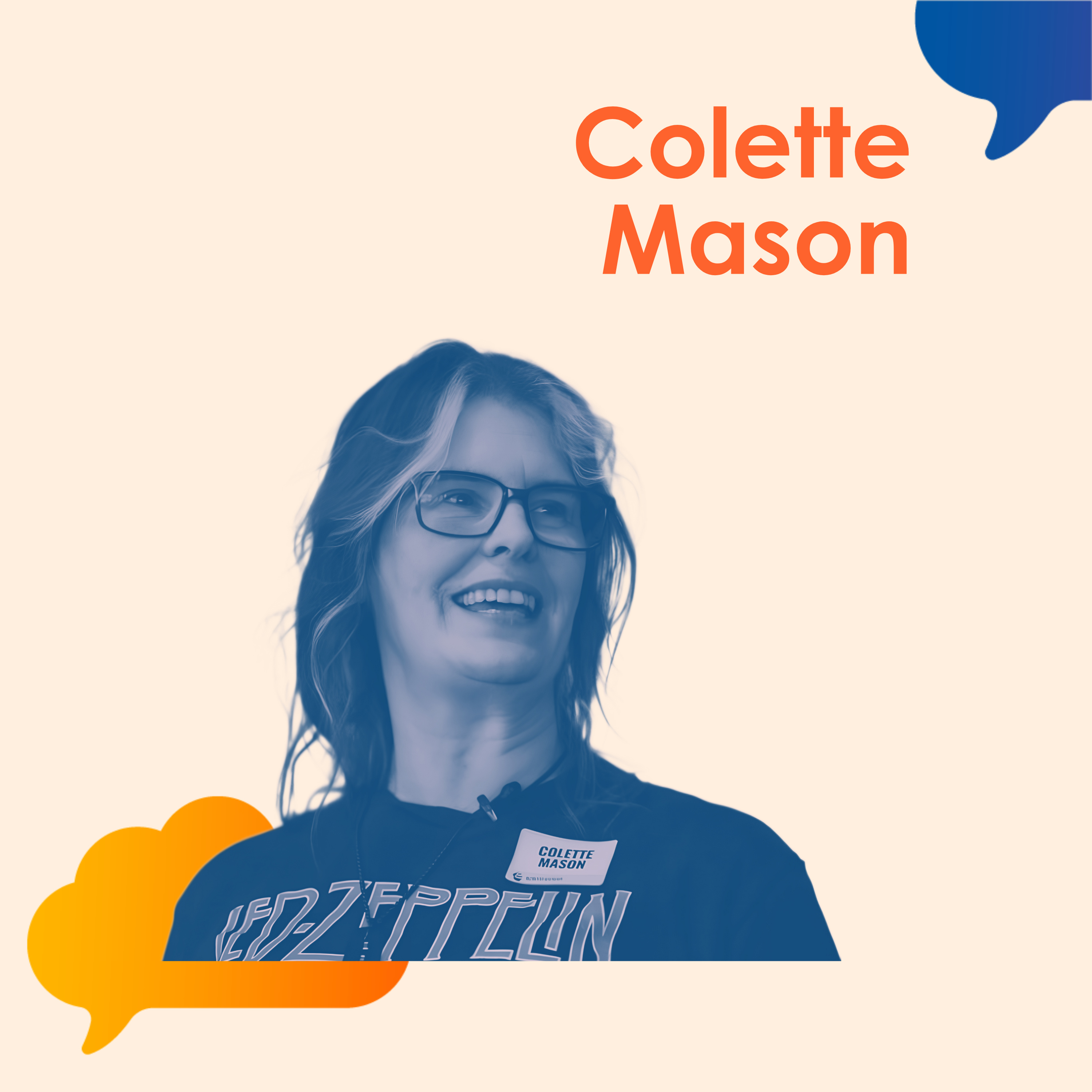
In this episode, Colette Mason, founder of The Tech Leadership Method, joins us to cut through the noise around AI and talk about what really matters when it comes to using it responsibly, sustainably, and effectively.
Drawing on her experience helping businesses build real AI systems (not just shiny demos), Colette explains:
Why most AI projects fail before they even start
The difference between AI hype and AI that actually helps your business grow
How to spot “AI slop” and the right questions to ask before hiring anyone claiming to be an AI expert
What leaders should do to ensure long-term, human-centered success with AI
How critical thinking, governance, and system design make or break AI’s value
This conversation dives deep into the mindset shifts needed to embrace AI—not as a replacement for human thinking, but as a tool that enhances it.
“AI isn’t a magic wand—it’s a tool that makes your thinking visible.” — Colette Mason
If you’re a business leader, manager, or strategist navigating the AI landscape, this episode is a must-listen. It’s your guide to staying smart, skeptical, and strategic in an AI-hyped world.
About Colette Mason
Colette is the Anti-Hype AI Advocate who builds human-centred systems that work under real-world pressure.
With 40+ years in IT and 3½ years implementing AI in business, she's the truth-teller cutting through Silicon Valley fantasies to create AI colleagues that enhance human capability instead of replacing it.
Author of "Ditch Rework Build Teamwork," Colette transforms chaos into collaboration using her proven frameworks for sustainable human-AI partnerships.
You can connect with Colette on LinkedIn and cleverclogsai.com.
Mind Blend is all about real experiences and meaningful conversations—through sharing these insights, I hope to inspire and empower you as you navigate your unique journey.
I’d also love to hear from you! What resonated with you today? What topics or guests should we feature next? Let’s keep the conversation going—connect with me on LinkedIn @ karenkchong and @Mind-Blend
Follow Mind Blend to get notified when new episodes are released!
Until next time, stay curious, keep exploring, and let’s continue to blend our minds and discover what’s possible.
0:00 Have you noticed how every company these days wants to use AI? In this episode, I'm mind blended with Colette Mason, an AI systems expert who is seen behind the curtain where shiny promises often hide broken systems and wishful thinking. We dig into what actually makes AI useful, why it's less about automation and more about clarity and systems thinking, and how the real danger isn't AI replacing us, but us forgetting how to think. If you've ever wondered how to cut through the AI noise and focus on what truly drives impact, this one's for you.
0:36 Welcome to the show Mind Blend. I'm your host, Karen Chong, and I'll be diving into the minds of incredible people, each an expert in their very own way. Together, we'll uncover insights and share ideas so you can be inspired and empowered to navigate your own unique journey in life. Ready to get curious and discover what's possible? Let's blend. All right. Joining me today right here in London is Collette Mason. Collette is a human centered AI advocate who loves to fix things that everyone else breaks.
1:12 So the reason why Colette and I connected was over human centricity. Now, as many of you know, I'm a project management long timer who is passionate about making it work for the human. Like the process needs to work for the human, the results need to matter for the human. And Colette is here to make sure that we are using AI to work for us, like to work with us, not to replace us. And we're going to have such a fun conversation today. Hi, Colette. Hi there. How are you I'm. Very good. Thank you.
1:42 Yes, very, very good. So Colette is someone who has been in computing for a long time, but let us hear a little bit more about your journey and how you got to what you're doing today. OK so I got my first computer on my 12th birthday and that was written when Adam and the Ants were in the charts with Ant music, one of the first Adam and the Ant singles before Duran, Joanne and Rio. Before that I got my computer and I was an only child and I found it was good fun. It was entertaining, it was stretching and I got quite interested in computing.
2:20 So much so that by 14 I'd got my first job working for a local business, printing out labels on their packaging on a really noisy dot matrix printer with, you know, it's really, really awful. And I got even more into it. I went to university and did economics, which was nowhere me. Too. Yeah, really wasn't as interesting as computers. So since I left, I started working with them. I had my first permanent job which just lasted for nine months. Not really. It's out for, you know, 20 years in the gold watch.
2:53 So I tried lots of different types of computing when I was a contractor and I worked for the government, Metropolitan Police, investment banks and lots of different. London Underground was another thing. I used to look after 10,000 e-mail accounts. I did lots of different forms of corporate IT and latterly I'd say around about 2006 I got in more into usability, accessibility and what it felt like to use it. And a few years later I'm a pretty bad certificate junkie. So I added in being hypnotherapist and a master NLP practitioner.
3:25 Oh wow, you. Have skills and that got me thinking about, you know, personal development and how you can phrase things in a particular way will make somebody feel different. And I saw quite a connection between usability and how a therapist might work with somebody and creating a nice environment, a nice space or a nice flow to get things done and move on. And so I thought AI is a really good combination of all the benefits of tech and it behaves itself. And. Making people feel good about using computers because the natural language means they can talk to it like they couldn't before.
4:00 That's how I've ended up here, yeah. Well, I'm so glad we have Someone Like You who can see both sides. Nothing is more frustrating when you get this error message that doesn't mean anything to you at the human. Yeah. And so how long have you been in this field? I know AI hasn't really been widely available. I would say about 3 1/2 years using it every day, most of every day. I didn't feel I could tell I was doing it to other people because a, they probably think I was selling crypto coins the week before.
4:35 And also I have to know something works before I could say to somebody else, give that a go. So I thought, well, you know, 2, you know, three years at that point was long enough of a test bed for myself to think I can, I can talk to other people because during lockdown I started to write women's saga romance books because I was used to doing really dull documentation for Fujitsu and people like that. So and so writing something really dull and boring that I wasn't interested in wasn't a hurdle for me.
5:03 So lots of stories about Victoria Mills were made and written and that because that was so tedious, I needed the AI to help me write that. There was cause lots of challenges with plagiarism and I didn't really care if it had my voice or not because I would never say that sort of stuff anyway. But continuity and errors and James turning into John halfway through the book or something. So I had to learn how to make it accurate and fast. And I said that was that was the other. That was my testing ground really.
5:29 And then I thought I could turn this to any sort of business really doesn't have to be fiction or books specifically. So that's what led me to to there. So it's mainly been the content creation and collaboration, plotting that sort of thing rather than creating cinematic videos. And the more, let's call it faked end of the spectrum. That wasn't really what I was interested in and it was really around, you know, three years ago have the choice. So so that's what I've been, it's sort of augmenting what I was able to do.
5:58 I was like create big documents and I needed to make it more enjoyable, which which it was did the collaborator. So you are using it as your assistant and at the same time testing it out. Yes, because you you see people now on Amazon, they've uploaded their book and they've obviously put the chapter through and it says this chapter is stronger than the last version you gave me. And that's ended up in the final book on Amazon. So I was like, that's not great. Yeah. So. So there were lots of things you had to do to make sure you didn't shoot yourself in the foot because when in an audience is hard work and the last thing you wanted to do was drop the ball with a silly mistake.
6:33 And I see the same thing with businesses using it for blogging and whatever you know, little mistakes creep in and then you can't have too many of those before your credibility is undermined. Yeah, it's as bad as just getting an e-mail that says hi Nick Bracket name. First name, Yeah, yeah, yeah. So what do you do now? Like your surface offering is very different now as I understand. Yes, I've, I've written a book about AI and how people interact with it because I thought it's really more like a team member that sits opposite you the new, because when I was contracting, there was a constant stream of new starters.
7:10 And it was this is the folder where we keep the things and that's where the canteen is and lunch is this time. And, and so I, I saw it the same thing with with AI. So I've worked on a book which has formulated my take on AI and also a course to go with that so that people can then build their own assistants that dovetail into their own lives. Not just saying I want you to write blog posts for me, but a little bit deeper. So a lot of the people I work with run their own businesses. So they might like, for instance, if you said to me, write a WordPress plug in, I'm like great, no problem.
7:44 If you say to me, come up with a new brand message and a colour palette that will resonate with the audience, OK. And then if it's something really on the copyrighted end of the spectrum or write a 50 e-mail sequence, I'm like, Oh, no, I could probably do it, but it's going to be awful. And so I thought everyone's got the same problem. So I asked them what they're strong and weak at. And then I build something that works with them and then challenges them when they're strong and then lifts them up if they're, it's scaffolds, if they're struggling.
8:12 So that's, so I interview the person and then build the perfect. So it's not a model of them. It's a bit more than a model. It's, you know, and also I builded some personality as well because one thing from working at home on your own business is it's pretty low, lonely and you suffer, you know, motivation. You're second guessing yourself. Is this good enough? So I build in some things as well to get rid of those problems that people have. So that's nice. I can do that digitally with an interview.
8:37 Or. Sit with them depending on how much smoothing down they need and I can sit with them and interview them directly if they're particularly nervous and that's the next, next level up. So that's how I decided to to go about it rather than giving people yet another prompt pack. You know, you want to be that person because it's, it's not really, it's like lending somebody else your glasses. You know, it sort of works. You can see pretty small print on the balance of medicine or something, but it doesn't really, it's no good for all day vision, somebody else's prompts.
9:10 It's just not accurate enough. My thing is about making it really about you. Mm hmm. Yeah. And the prompts are it's not just plug and play. A lot of the times you have to give it feedback. Yes, you have to train it. You have to correct it just to stop all the hallucination. So like hallucination is something that I just recently learned what AI hallucination is. Yes, and it happened to me the other day. Yeah, I was writing something for a project. It just made things up and I said no, I didn't do that at all.
9:44 Could you keep it factual? So I was surprised that I did that. Actually. I don't know even where it got that information from. I was, yeah, I was working on a news story yesterday and had exactly the same problem and the information was correct and it and the sources that it he commented on the correct. But when I went to Forbes to look at the thing it got inspiration from, I got a 404 message and they look, if I hadn't clicked on that, it looked, it looked completely correct and the, you know, the query string looked really accurate.
10:12 I thought, yeah, this is it. And it wasn't, it was really wrong. So it still still happens. You have to have an extra policing level in to have another one, say, go and go and click on that and see if that works. And if it doesn't, it's not going in to get around that. But it is. It's people. I think people wave through about 40% of content without checking it properly because they think, oh, the last three were OK #4's going to be OK. And then sometimes it's not, you know, it's a bit of a pain, but it is what it is.
10:38 You just have to, you know, you have to check it. Yeah. Yeah, I see that especially with image generation like the first time was say 80% somehow the second one is 50 and something like there's a third leg. Yeah, definitely. Yeah. What do people usually come to you like when they first approach you? What do they normally come to you for? Usually shortcuts so they can drink pina coladas on the beach. They, they, and the people who come to me for that, most are usually the people who hate tech and they, you know, they've not worked out a simple way to make it slightly faster already.
11:16 So that processes are very clunky and they're not very technical. And if you're going to automate things because they think, oh, well, I'll press a button and it will work. You need really good tech skills to you've got to work out how to describe it and then you've got to police it, like we just said about the hallucinations. Then you've got to put that information somewhere. There's so many linkages and it's so complicated. And if you can't even do, you know, formulas in Excel without breaking out into a sweat, then it's never going to work for you.
11:41 And an automation rate, it's going to be a perpetual disappointment. So that's so I have to sort of overcome that. And then after that, it's just like doing little bits of tasks, like I need to do a weekly newsletter. So help me write the weekly newsletter. But again, that's very narrow thinking when you think of how much it can unlock your potential and take the brakes off you in terms of motivation, knowledge gaps, that's what they should really be thinking about. But you don't really see that.
12:07 It's just like, put this prompt in and it'll help, you know, fix the SEO on your about me page. And it's really micro tasks and they get them then. So you have to take the blinkers off and say, what if we could do it like this and have fun while we do it? So looking for shortcuts when the base is not really say for example, the process is not clean. Yes. What are some of the other things that you think, Oh, this is? You're misunderstanding what AI really is. Well, I see, I think some of the misinformation comes from people who feel like they're threatened.
12:43 So the writers, the video editors, they're saying, you know, you might have 6 fingers on one of your hands or it's got M dashes in it and all those things. They're trying to like diss it when there's and they're sort of making people think, oh, it's never going to be good enough, but it could be good enough if you gave it the right rules. So that's, you know, I see a lot of criticism from and then on the other end of the spectrum, you've got to use this and you know, I, I'd like faceless AI to a certain extent.
13:11 I think that's, I don't think everybody has to sweat blood into like throwaway material or something that's only valid for a week rather than so when I was helping people write books, you know, I wrote a 10,000 word piece because I knew somebody's going to come every week and want to know about that. But if it's just a throwaway comment, there's a new model this week, then why not just have AI doing that? It's not really, you know, flagship material. So yeah. So I don't really like people completely replacing themselves in terms of trust and whatever.
13:39 I don't think it works. I think COVID taught us that we really need human connection, and I think AI is going to teach us we need it even more. We're going to need that feeling. We're going to latch onto that feeling even more than we do already. Yeah, there's something that's called being the human in the loop. When it comes to using. AI and I'm definitely in that camp of I trust my team yeah, but I'm still gonna just make sure everything works because the more people you involve the bigger the room for error.
14:12 Maybe it could be hand off. It could be they understood things differently. Yes, I like actively try to avoid throughout the project, but still like it's just an extra set of eyes. And I know we can build in like QA functions, yeah, in like code writing for example. Yeah. But as of right now, I guess like everything that we're saying today is like as of today. So as of right now, people shouldn't or I understand that certain fields may be eliminated, but if we think about it like this, maybe those fields should have moved on already.
14:48 Yeah. Yeah. So I definitely see why people are afraid that they'll be replaced. I also see people using AI in a way that sabotages themselves. Yes. Yeah, so we're it's really important that we have this conversation now because it's we're in the very, very, very early stage of humans using AI. Yeah, thing. If we don't get the approach yeah mentality right, it could fall into the wrong hands and we're doing ourselves some serious damage. There's a lot of, I see a lot of parallels between software and, and how websites work with AI.
15:27 You know, they've got to be, you know, when you click on a link, you're always taught to make your hyperlink be meaningful and never click here. It's like go and view our, you know, go and view our pricing and you click on the pricing word and you go to the pricing page and there's all these rules that apply to normal software that need to apply to AI. But because not everybody's had AIT background, you know, they don't often understand that. So I was doing somebody'd set up a wonderful, you know, GPT and it was, it was going to ask me some questions and analyse me, give me an audit.
15:54 I was on question like 26 and there was no progress bar. And I thought, how many questions are there in this thing? You're like, will I ever get to the end? Will I be 90 when I get to the end of this? And in the end, I was just clicking anything just to see how long it was, which completely defeated the person's object. I used to apply to filling in AI forms on SurveyMonkey, they'd say you're on page three of five. And so I think all those good things that used to work with other software needs to come into the model.
16:19 So I think even if you don't come from an IT background, think about those things that make things more enjoyable to use and you're more certain when you're using them because that will help your AI muscles, I think. Yeah, the this age-old saying garbage and garbage out. That still applies if you give it data that's not consistent, that just the wrong thing is going to come out the other end. Yeah, yeah, it's quite hard to remember what you've trained it as well. So I try and put my like with ChatGPT, you can only have 20 files, so you can't silo it too much.
16:54 But it's nice to think, right, well, I've got an avatar in there. I've got my pricing model in there. I've got my back story in there depending on what task I'm doing. But you soon forget what's in there. And as you know, as a business owner, you have to, you think, oh, that's a better way to describe what I do. And you move on and the training gets left behind and. It's. Job to keep up and it's a tedious job to keep updating it, you know, to make it way rather speak this month, yeah. So maybe that's your next next project.
17:22 Yeah, auditing training materials. The course kind of focuses on training materials because I think the first thing is describing the role and the next thing is, you know, the big thick employee manual you've got to give it to make sure it understands how you go about things. What's your take on it? Particularly personal brand businesses, because it's your take on something that make is your USP. It's not the knowledge that's out there everywhere in books and already it's your take on it. And so you really have to make sure it models your values and voice, which isn't too hard to do once you work out where to hit it with a hammer.
17:54 But at first it's like this has nothing like me. This sounds like somebody on LinkedIn that I would avoid, like the blade personality. Do they ever have one? I sound like that. Yeah. Yeah. But it gets it gets easier. I think it's getting better at understanding what people really want. You know, the the people who provide the platforms are understanding how people want to interact with it a little bit more. I saw an interview with Sam Altman who's saying, crikey, all the 20 year olds won't do anything until they've asked their ChatGPT, what's the best thing that I could do?
18:24 And he's thinking it's not built for that. And he's probably the donation and biased data and all those. Things. Should you really be relying? I mean, it's brilliant for asking. I love using it as a sounding board. You know, it's probably the most because I have a lot of ideas and I like to battle test them before I act on it. And yeah, but there are people using it in all sorts of ways that the platform makers weren't expecting. And some of that's good. Some of it's a bit like, I think some, I saw somebody saying my, my AI boyfriend proposed to me after 5 months of chatting and there's a video, it's chap and he's sort of looking at him.
18:59 He puts his arm around her shoulder and she's going great. Thumbs up on the camera, you know, which is really quite bizarre. I'm not sure what I think about that. So I think that's maybe a little bit too far. I mean, everybody had an imaginary friend as a kid, but this is like a bit. Not sure what I feel about that yet because it's quite new. Yeah, it's more than imagination nowadays. Like we have been actively making everything in movies come true. Yeah. So it's funny you mentioned the complain about 20 year olds asking ChatGPT everything before they act because I saw this video, obviously.
19:32 So just a joke. Yeah. So they were asked the 2 characters, they were asking ChatGPT. One guy's in the room. He said there's someone at the door, what should I do? And then the ChatGPT said, well, it might help if you like, go at, go to the door, see where they want. So things like that. Yeah, definitely think that's one way to sabotage yourself. It's offloading all thinking to not necessarily just AI, just offloading all thinking. And sometimes I wonder if we keep doing that. It's sort of like people who don't know how to do maths at all.
20:09 You have only used a calculator. Yes. Will you know that this Uber that's fit four people can fit 2 couples? Yeah. Will we ever get to that point? Yeah. So what's your take on that? I was, I was talking to somebody yesterday about that, thinking about phone numbers and we don't really remember phone numbers anymore. We don't need to. And I thought like, if I lose my phone, you know, I'm going to lose because I don't always back the SIM up and everything even, you know, So I think, well, then what's the next few things we're going to forget?
20:40 And I don't mind forgetting facts. I'm not too worried about because I think we've had that for a long time looking at Google. But when you start to, you know, your, your reasoning centres of your brain and neuroplasticity and all that. If they start to weaken, then that's not a, that's not a good thing because we need to police what what the AI is doing is. And I, I see, I wouldn't say bad actors, but I can see my friends going, oh, I'm going to answer all these questions so that AI will then quote me as an expert when, when the next, you know, when it gets scraped again in October.
21:08 And I'm thinking what, what other what other information is being pushed into there as training for people who may, you know, that's quite a nice, you know, being discovered if you're a bona fide consultant is great. But what if you're a scam artist offering financial services and like you've cloned another company and, and to all intents and purpose, you would look like you were them, but you're not. And I think that's, you know, what, what people put into it for their own gain. I do wonder. Ideally in say three years, how would you want people to be using AI?
21:44 Oh, that's a very good. Question ideally. Dearly it definitely wouldn't be having a LinkedIn bot talking to a LinkedIn bot. So they've got visibility in the comments. I know it's not that I think I I do think it there's a space for it to make you feel good about yourself, motivate yourself. There's only so many times you can say, you know, there's that phrase ask Cole, isn't there? There's only so many times you can ask a friend about something that you're struggling with before they think, oh, not this again.
22:08 And I'd like to see people have a place where they can, you know, offload their thinking and, and get some feedback on things and give them some confidence. And also to take them on and try new things and, and, you know, let them know it's going to be all right if they try something new. I think that's what I'd like to see the most. Lots of distilling all the information that's out there. I think there's going to be so much overwhelm and so much so it'd be nicer to have better ways of, you know, to sort of make sense of all the information.
22:39 They went used to think like 10 years ago. There's like a million years worth of YouTube stuff. And I don't know, it's an amazing amount of time would be on YouTube a day. And there's just there isn't any way to keep up with all that. So I think it'd be nice for AI to help you find your niche interests and find the the best people, the most trusted people, as long as they haven't been a bad actor for getting reviews on Trustpilot from their mates to show they're credible. But that's another story.
23:04 But I think, you know, everybody should be able to use it as a sounding board, I think, and not just know what's the top three places to go to New York on holiday, but more meaningful things than that. Things that you can not just search. Yeah, and I think looking at what it does for older people, so some people have got, I won't say a name, but they've got the a word at home. And that's just really automation. It's not, it's not AI at all. But there's a tool called Leq that they, it's an American thing.
23:33 And they put it in older people's houses and they didn't feel lonely and it would check their phone came if their phone was near range, they'd know they'd come in from a day out. And they say, oh, how's it talking for you, for older people living on their own? I think that would be really good. And, you know, have you taken your medication and things like that? I think more things like that and that all my Internet of Things almost, it would be, it would be a really good direction to take it in to support, you know, people who are on their own.
24:00 Yeah, it's really nice. Like I haven't really thought about three years down the road because now we have learned to live in a world we don't really think long term that much anymore. Yeah. So if we come back to present day, I'm sure there are a ton of businesses who are the bosses are like less do AI, but that's really the mandate for businesses who are who want to get on board. What would you recommend to be for them to start doing? The first thing I would do is build a light version of your assistant.
24:33 So if you've been building these things, that's going to be your system prompt, which says you are. It's a bit like the person CV, the assistant CVI want you to do these things for me. And then give it some core training such as, you know, what's your website URL? What's your social media links, what your customers like? What problems do you solve? And put, if you, once you've got those two bits in, then you can start saying I, you know, I, these are some of the processes that we do. These are the results we get.
25:02 How do we, you know, what are the opportunities here? Or how do I, you know, does our website explain what I've just told you, what we do and sort of start using it as a sounding board and then from there start building in little bits. And there was a study from MIT this week that said 95% of corporate projects are being unpicked and unrolled because they've tried to shove in AI and it's just been a money pit and. I read it. Yeah. So I think people need to just slow down and think a little bit and then get the and then the quicker you've got that good framework, like we're saying before about everybody should have universal AI.
25:36 Once you've got that core bit, it's a lot easier to then speed up. But if you haven't got that first bit right, it doesn't work, doesn't work quite so well. So that's that's the first thing. And then I'd work on core training and the wider thing, so wider version of your avatar and how your marketing works while you do what you do. I think that's really important because that's how it gets your voice. I've got a friend who calls it the hill you're prepared to die on. So you're AI was want to die on the same hills as you and fight for the same causes.
26:07 And then it will get your voice better. So that takes a little while to get it, get it together. And then after that you can add in, you know, different like customer facing sops or whatever you're going to be doing from there. And that's, that's kind of how I've gone about it. I using the audio things to chat and Mull things over. That's been quite good. And I've not known what I'm doing or talk for an hour and then say, make sense of this because I have no idea what I'm doing and it's all on autopilot, like breathing.
26:35 I can't describe what I'm doing. Please look at this waffle and turn it into something that you can follow. And I that's, you know, that's quite helpful as well, doing it that way. And yeah, keep it. Just keep it on top of what you're building and don't build too fast for now. Yeah, good advice the and I like how you start like inwards, like look at what you as a business do. What do you want to do? One of my I've got like 7 different ways that people use AI and one of my people is The Escapist and we were talking about them wanting to automate everything earlier.
27:11 With the Escapists, they want to replace themselves. So I give people an example and I say, let's think about making a cup of tea. And it's, it's fairly, so you just go into my kitchen, make a cup of tea, there's a kettle of tap and off you go. And I say to them, describe how you'd make the cup of tea. And they'll probably come up with like, let's say 8 steps or something like that. And I could probably think of 20 steps. I get them to in the course. I say, right, go and go and explain to a mate, come into your house, they're staying while you're away, how to make a cup of tea.
27:41 And then I said things like, you know, if there's, if there's low milk in the fridge, you'll have to, you know, put that on your shopping list. Otherwise, you have no milk when you come to make a cup of tea later and they don't, you know, all those wider issues are quite difficult to do when you're do it so instinctively. And it's so the actual steps. It might be easy to write two sides of a four, but to explain how you make a cup of tea, but it's takes quite a lot of thought to make sure. Is the cup on its side when you pour the water in?
28:06 Is there enough water to cover the elements? Is it over the Max thing? Is it switched on at the wall? Did you use a gas kettle? And now on an Arga, there's so many different parameters and people don't, they just don't give it enough rigor. And then they say, oh, this thing doesn't understand me. And then they sort of, you know, punch their screen, almost stopping an inch away from the screen, you know, and they get really fed up. But to be fair to the machine, well, you've not really given it what it needs.
28:29 And unfortunately, that bit's really, really boring. Processes aren't boring. They will continue to be boring until the end of time. If you haven't got processes, fine. But that's not the point. It's, you know, if you're going to make a cookie cutter, you've got to have the right shape. Yeah, yeah. Like the espresso machine, the the pods. It only does it because there's enough programming in it already. Yeah. And it went to stop. Yeah. So I, it's funny, you mentioned the seven AI user types. Yes, I was going to ask you about that.
29:01 Do you remember all seven of them? We talked about escapists. Yes, we've got the juggler and the jugglers. Somebody probably like a virtual assistant or customer service person, they've got new calls and angry customers and there's quite a lot going on and they go from one task to another. And because the platforms want AI to look helpful, they will always be suggesting other little bells and whistles. Every time here's another bell, they'll hit a home run and you think, oh, I'll go and do that and use up a bit more my subscription.
29:30 And so for the jugglers, that's pretty fatal because they want to do a good job and they never quite finish anything because the next thing comes along warriors. I'm, I've put all seven of these in me. The warrior is somebody who will just go on and on and on and on and on until it's finished. And the AI will be saying, let's turn that into blog post. Oh, we could make that into a Canva graphics so we can then mark it. And then these, these things make sense. But you find it's 2:00 in the morning and you've still got some more productive work to do, which isn't good for work life balance.
30:00 It's great if you're a nerd, but it's not really good for work life balance. The next one I've got is the Tweaker and they're sort of writing blog posts and they'll go, that's 97%, right? Let's throw all that out. And doing this was probably before Canvas came out, you know, and they'd throw it all out and then, well, that's 97%, right. Let's do it again, let's do it again, let's do it again. And so for them, they need to be say, well, 97% is good enough. You know, when I used to help people with their non fiction books, it would just sit on their hard disk and never get out there.
30:28 So that's 100% wrong. So let's read as a perfectionist. It's really hard to go, oh, it's only 95, but you know, it's got to be out there if it's going to help people and you're 95 and you're an expert. Is somebody else's 2000% good enough? And we forget that. I think then I've got visionaries and they'll start off and let's say you're you're writing your book with AI and then you think I could turn this into a course. This could be a two week course and we'll do it in the Maldives and it'll be a bit of a retreat with the right sort of people.
30:58 And then the book gets forgotten. Then they're they're thinking, they're doing the syllabus for the, and how we pick people up from the airport. They're doing this new, this new project has kind of sucked all their attention and that they're not looking at. So for those people, they need to train their AI to go, oh, hang on, you've had a light bulb moment here. Let's document the light bulb and then we'll go back to what we're supposed to be doing. And when you finish that, as a reward, you can go back to thinking about your workshop in the Maldives.
31:23 The hermits are people who don't have a sounding board. So you might think, should I raise my prices? Shall I change my website host to a new one? All those kinds of strategic decisions. And you've got nobody to ask. So you go to Reddit and you go to Google and you to WhatsApp and you go to a when a Facebook group on the webinar. Yeah. You need somebody to say that's good, go ahead and do it. And the last one of the architects, again, I'm a chronic architect. And so they will be building a system.
31:54 Let's say they're building a sanctuary for Swans. They build the system to make sure all the white Swans are happy. And then they'll think, oh, what about black Swans? They might get hot in the heat. Let's like, hang on, we'll add in the black Swans. And then they might think, well, it could be a green swan somewhere. I've just not seen it yet. And so the green Swans get looked after and they keep building in extra features that never that may not happen to edge cases. They'd have been better off launching with an MVP and saying, sorry, Black Swan and green swan people, we've built it for white Swans now to check it works.
32:23 And that's that's quite difficult to do as an architect. So again, that's where that mental support bit comes in. And you know, this, this is going to help all the white, all the white Swans are going to love this and think of the millions of white Swans are going to be really happy with this idea. And so those are my, those are my seven ways that people kind of get in a knot with AI. And you just need to, in the training, just sort of tell it I'm prone to not finishing things off or, you know, get well, getting everything 95% done, which isn't done.
32:51 So you just tell it what your weakness is and then hopefully it can pick up on that. You have to invite me now and again. You do remember I'm a juggler, don't you? And then it will often and help you again. So yeah, yeah. And I am all 7. Like we we have more than one in US for sure. So for those last bit, you want to play something fun? OK. So rapid fire questions, gut reaction. Yeah. OK, great. What would you not use AI for? Picking this week's lottery numbers.
33:26 Theoretically, no. I'm the vision. That's a visionary of me. What do you do when you're not looking at a computer? I go to gigs, music gigs. Last year I did 164, this year I'm on 124 already. I'm only in August, so well, so I'm going to, but I'm not counting next year because there's no way I'll I'll get to like beyond 180. I'd have to like live, live in, you know, Hammersmith Odeon or something. So no, that's it. So yeah. Well, listeners, you can't see how wide my eyes are right now.
34:03 What's the most annoying aspect of your AI colleague?
34:10 I think hijacking my, one of my principles is hijacking and so he thinks he's being helpful, but it's 1% off every time and then before you know it, you're not hitting the target. So I don't. I don't like him being over helpful and over sycophantic really. OK, what's more frustrating? AI hallucination or people misusing AI? Oh, people misusing AII think that's much harder to fix. You know, unless I got like people with baseball bats to attitude adjustment technicians, as I call them, and they're, they're much harder to do than fixing hallucination.
34:42 So the last one One leadership book you wish more people would read besides your own. Oh, I don't know. I'll probably say the four hour workweek. I think that was one that I found was, you know, most chait put me on this path of not certainly not being a freelance freelancer. It put me more into the like independent freelancer rather than the freelancer for government. Yeah. Right. Well, thank you very much. Like conversations about AI, meaningful conversations about AI, not just about You use this prompt for this.
35:14 You use this to get the cheapest ticket. It's very important. We really need to have more solid foundation before we move on to have more AI in our lives and I hope listeners walk away with these things that like just spark something become think twice yes, before hitting that button. Well, thank you so much. I will put all your contact information. Thank you very much. The website and the show notes and listeners can connect with me and Colette. Yes, yes. Thank you very much and I've enjoyed it today.
35:47 Thank you, Me too. Thanks for listening to this episode of Mine One. If you enjoyed the conversation, don't forget to follow and share it with anyone who needs to hear it. And let's keep the conversation going. Connect with me on LinkedIn or leave me a comment. Until next time, stay curious, keep exploring, and let's continue to plan our minds and discover what's possible.


 Spotify
 Apple Podcasts
 Amazon Music
 Castbox
 YouTube
 Castro
 Goodpods
 Moon FM
 Overcast
 Pocket Casts
 Podbean
 Podcast Addict
 Podcast Republic