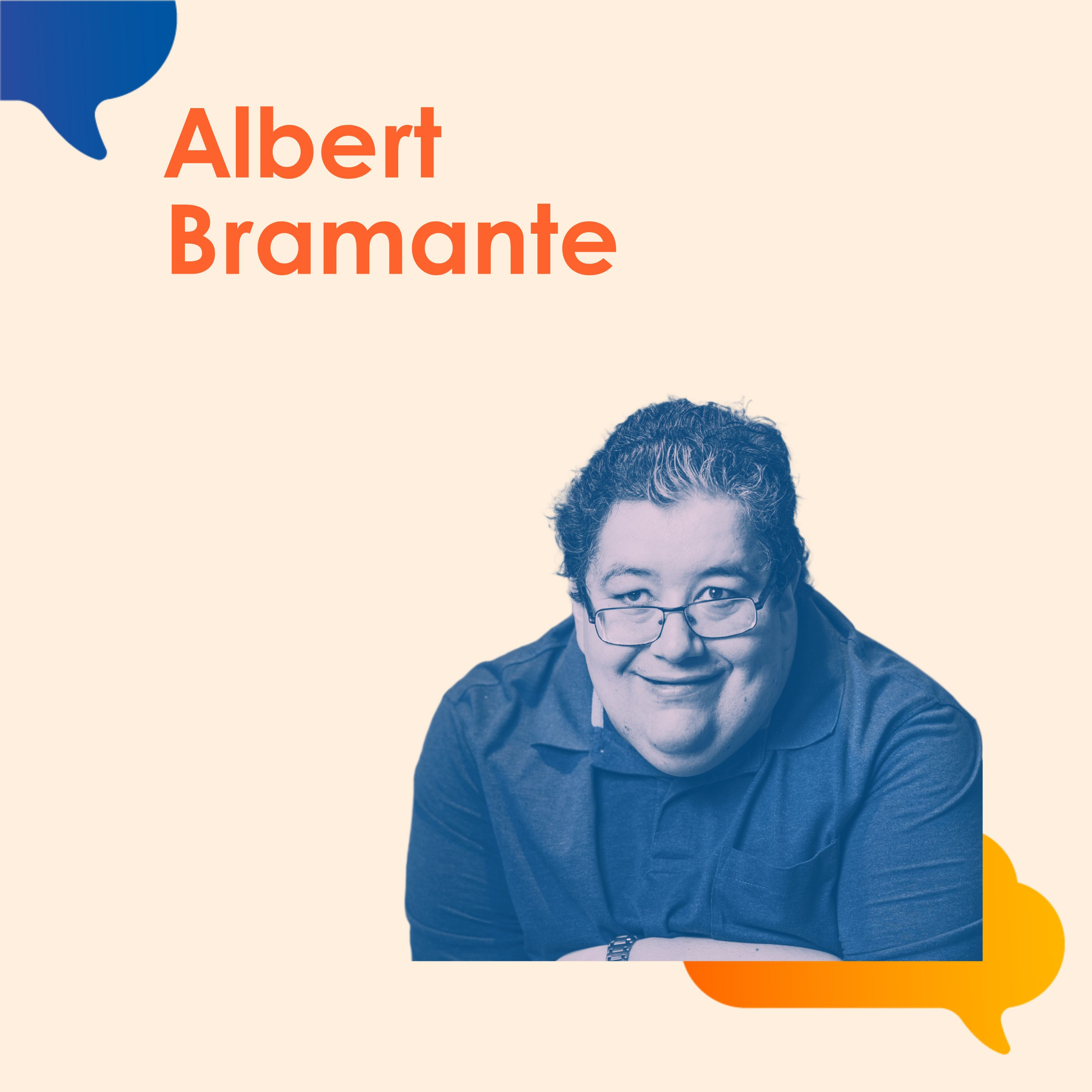
You Know You’re Stuck, So Why Aren’t You Moving? with Albert Bramante
About This Episode
Episode 2 of 4 of the mini series - Rewriting the script of your life - Stories of courage, reinvention, and becoming who you were meant to be.
Ever felt like you know exactly what to do—but still don’t do it? In this episode, I mind-blended with Albert Bramante to unpack the real reason behind that invisible wall. We explore why self-awareness alone doesn’t change behavior, how fear and self-sabotage are actually protective mechanisms, and why confidence is built through action—not thought. Albert also shares a powerful reframe on rejection and the hidden role of identity in keeping us stuck.
If you’ve ever questioned yourself despite knowing better, this conversation will shift how you move forward.
About Albert Bramante
Albert Bramante is a psychologist, certified hypnotist, and veteran talent agent known for his work on behavior change and performance psychology in the entertainment industry. He combines insights from cognitive-behavioral science with practical experience managing actors to help performers overcome self-sabotage and mental barriers to success.
You can connect with Albert on LinkedIn and Instagram. Check out his book Rise Above The Script: Confronting Self Doubt and Mastering Self Sabotage for Performing Artists.
Mind Blend is all about real experiences and meaningful conversations—through sharing these insights, I hope to inspire and empower you as you navigate your unique journey.
I’d also love to hear from you! What resonated with you today? What topics or guests should we feature next? Let’s keep the conversation going—connect with me on LinkedIn @Mind-Blend, Instagram Mindblendpodcast or mindblendpodcast [@] gmail.com.
Follow Mind Blend to get notified when new episodes are released!
Until next time, stay curious, keep exploring, and let’s continue to blend our minds and discover what’s possible.
0:00 The important thing is to take action because the biggest thing, the biggest addiction and the biggest thing they're going to hold us back is being comfortable. Being comfortable. In our comfort zone and staying within our comfort zone, that can be the biggest thing that's going to hold us back because we're so concerned about, again, being safe, but unfortunately being safe is not going to move us forward. Have you ever found yourself knowing exactly what you should do, but something inside just stops you?
0:30 The invisible wall. Fear, self doubt, overthinking, we've all hit it. My guest today, Albert Vermonte, has spent his career helping people like actors and professionals breakthrough those walls. Albert is a talent agent, psychology professor, certified Hypnotis, blending science and art to help people rise about the mental script that holds them back. Welcome to Mind Blend. I'm your host, Karen Chong. In each episode I talked with people who've experienced something real and we breakdown what made the difference so you can see yourself and the world.
1:07 Around you more clearly. Spot what you might have been missing and move through life with a clearer way forward. If you like what? You're hearing. Share with those around you and subscribe to Mind Blend. You'll help a lot in spreading the insights for anyone who can use them. Let's blend.
1:24 Hi, Albert, welcome to Mine Blend. Hi, thank you so much Karen for having me on here. I have alluded to it in the intro. Tell us how your experience manifested and how it let you doing what you're doing today. The one thing that I got started with is, yeah, I've always been curious about human behavior and human nature, even as a child. As a child growing up, I was very much interested in human beings and why people did what they did. So I always asked a lot of questions. And I think this is where being yelled at a lot as a kid, sometimes being a nosy child, sometimes comes into handy now, because I was always, I was just always curious about people.
2:07 What made people do what they do or why do people? What makes people tick? And so that's where I kind of got started in, in just, you know, studying people and looking at people. I'm glad getting yelled at a lot did not stop you from being curious. I know, and I did that. I, I, I was a stubborn type of person as a child. And I think now I look at that as a badge of honor. You know, I'm definitely determined to sort of do what I do it stand up for what I believe in and in a sense, and when I put my mind to something, I'll do it.
2:43 And as we will find out in this episode, the mind is powerful. So what do you do now? So what do I do now? Well, I I'm a part time college professor and I work in the entertainment industry, so I represent actors of Dallon age in New York and so I really work with helping people reach their fullest potential. When you say actor, immediately I just think of additions over addition like what we have seen in the media. It's just rejection, like you can't really breakthrough and it's just frustrations.
3:21 So I feel like you have nailed in in the one group of people that really need help with self-confidence, self sabotaging and like imposter syndrome. Of course, and that, and that's, that's a big belief in that too. So that's really where I, I work in, in, in those areas. How did you get started with helping actors? Well, I started off as an actor myself. So even when I was going to college, so I was in a drama club, I was in took some acting classes as electives. And so I was really just interested in general about people in a sense and, and just and telling stories.
4:05 So that's sort of like where I really thrived in a sense. Like telling stories and teasing things out of people or. You know, we're just telling stories and bringing things out of people, you know, helping people tell their stories or even just bringing out emotions out of people because that's really what performances do. They elicit emotion, whether it's comedy or drama to make people think or reflect so or it's bringing things out of people. And I was just very interested in that, you know, aspect of thing, but I really didn't necessarily identify as an actor myself.
4:43 Yeah, I really it, it was just not for me in a sense. But I really enjoyed being around people. Yeah, it's not for everyone, I guess. Yeah, and that's it's definitely not. And but I enjoyed being around actor. And so I was like, OK, if I can't be an actor, I want to work with that. And so that's really where I started. We're going to be generalizing a lot here. What are some of the patterns that you see in actors who are who are getting the gigs compared to the ones who are not really? The one thing is a growth mindset is important and really having the ability to be coachable, directable and the ability to learn.
5:18 And so that's very important to really have that growth mindset is really that the aspect of having the growth mindset, the ability to really set foot into things and be persistent, tenacious, resiliency, being coachable is extremely important, but also having good business sense. And we call that trait personality great conscientiousness. So tell me more about growth mindset. I know not everyone probably understands the key of growth mindset. What is an example? I think the important thing is to really have that ability to grow, to be able to adapt, be persistent.
6:00 So I'll give you an example. Let's say you're a student in school and maybe you don't get the grade on the assignment that you want. OK, take a task. You don't do too well on it. A growth mindset would be the approach you would take as a student. Be well, that was unfortunate. What can I do to do better? What can I do? I need to study more. Do I need to ask for XRL? Do we need to go to tutoring? What do I need to do to get the better grade or what? What can I do to be better? Growth mindset are people that like challenges.
6:30 OK? Whereas if you have a fixed mindset, which is the opposite, you would think I can't do this, that's it. I'm a failure, you know, I give up, I quit. So growth mindset looks at hardships or as challenges only. Hardships as challenges only. So hardships are things that help you grow. Help you grow and that they're and you can overcome them and then you can work through them instead of being like the roadblock, like, that's it. Yeah. Because again, sometimes when people get hardships, they give up.
7:01 Yeah. They say I quit or they just move on. Yeah. And that's something I wanted to ask about rejection when it comes to actors and actresses. And you probably have seen many of them getting frustrated from the rejections. So how do you approach them? Well, the important thing, I mean the reality of the industry is that you're going to get more Nos and more yes. Yeah, that's applies to not just acting too. It's like job searching nowadays. Well, I job searching, you know, putting your anytime you put yourself out there, it sometimes may not go the direction you wanted to go in.
7:36 And so that's something that can come up over time and I can sometimes affect the actor so much. So I think if you look at it and reframe and say, OK, there's no such thing as rejection. It's just a simple reminder that your services are not needed today because you there's so because it's, it's such an over saturated field with actors and there's only a limited number of roles. So only one person get the role, which means that not everyone's you're going to get more Nos than yes. And a lot of times you could give a really great performance and a great audition or like a great interview, even if in other fields.
8:15 And that doesn't necessarily mean you're going to get the job because there could be so many other factors there that are outside of your control. All you can do is a performer or a business owner or or a young professional is give the best interview slash audition that you possibly can do and then let it go. You know, it's the after that it's outside you control. So the one thing that two things that we can do is let it go when the audition is over, when the interview is over, as soon as you walk out of that, it's over, move on.
8:44 Your focus should be what's the next stop? What's the next, you know, interview or audition? I'm going to try to, you know, where to get. So be focused on that. And then also if you, if you get that, no, it's going to be reality. Most of the time it's not personal. Yeah, that just just brings so true to me. It's hard to not take it personal. It really is, especially when, you know, as an actor, like when actors audition, they're putting themselves out there, they're making themselves vulnerable.
9:14 And that's what's really creating such a hard experience because you're putting yourself out there and there's not much to see from that, really not much you can get out of that, but you're not getting the results that you want. Yeah. Especially for actors, because of the repeated nose, you can start to doubt yourself and that's where self doubt and imposter syndrome comes. In yeah, it's chipping away at yourself. Confidence each. No, it's stripping away at your self-confidence. I'm just thinking of, like, how many times have I, like, kept rethinking replaying the interview, like rethinking of what answer I could have given.
9:51 And I'd, like, lose sleep on it. I really love the way you rephrase it. My services are not needed today. Yeah. Yeah. I love that quote. So you mentioned imposter syndrome. There's a whole lot of imposter syndrome when it comes to not just acting. What is some approach you would suggest people take to tackle imposter syndrome? The one thing that can really come in is to really take stock of what you've done, OK in the past, because a lot of people, you know, undervalue or underestimate or kind of delete all of the good things that they've done.
10:25 They downplay it or they don't really pay attention to that. So the first thing is to kind of like, remember, OK, what have you accomplished? Most people downplay that. So it's like, sometimes it's doing like an audit of what your past accomplishments are first. That's the first thing to do. The next thing to do is to focus on working, getting a better peer system. Sometimes, like a peer group is important because your your crowd, your group is going to sometimes really define you. Is it like friends and family?
10:58 It could be. Well, your friends and family, yeah. Now, obviously we're kind of stuck with the family. What? We're what? We have. But they may not always be the most supportive or the best people to have around sometimes. And, and that that can be tough. That can sometimes be a tough thing to to face. So how do you build this group? Like how would someone build this group then? How do you build this group? Well, go to masterminds communities that are in your interest. Go to meet up. groupsmeetup.com is a great website.
11:34 Don't look for meet ups that are in your area. OK, go to networking events and just start building yourself up. That's the important thing, is to work on building yourself. Up so surrounding yourself with people who will be sort of like sounding board and cheerleaders, would you say? Yeah, and accountability partners, that's the main thing too. That'll lift you up and elevate you because so though that's the second thing, the first thing against do the deep dive audit. The second thing is to your peer group, your associate group.
12:05 And the third thing I would really recommend is taking small actions towards your goals. Yeah. Every day doing something that moves a needle a bit and then step outside. Another thing would be step outside your comfort zone. So go give a presentation, you know, at a organization, go to a networking, you know, event and talk, you know, put yourself out there, go on live online if you have to and just get out there and you know, do something that kind of again steps out of the excited comfort zone.
12:38 Prior to COVID I used to host just fun nights with my client acting clients karaoke. Nights. Yeah, yeah. Yeah, in New York City. And karaoke is a very it's a very powerful way to step out. To your comfort zone. I actually was interesting because I actually heard one time a coach was advising their because when you could do karaoke comfortably afterwards, speaking in front of a group is going to be easy. Yeah. Another one of my trainers that I used to train with used used to do a two or three day public speaking group class seminar in the in your city and the 1st exercise major exercises to go out in public and make a complete fool out of yourself.
13:21 OK. It's unconventional, but his knowledge was if he can do that, getting in front of a group of people that are there to hear you speak is going to be a walk in the park. Yeah. And a lot of people that did that, that were really uncomfortable in the beginning, by the end of the workshop, where most vibrant speakers because they were able to step outside your comfort zone. It sounds like confidence is definitely something you can train. Yes, it certainly is. And it takes practice, it takes persistence, but it also sometimes it's just about like really ripping off the Band-Aid and doing it.
13:58 Yeah, yeah, ripping up the Band-Aid. If I were to think back on the first time I had to speak in public, I think that was in high school or something. Compared to now, I haven't done much like large group speaking for many years though, so not quite sure, but at least talking to people I'm meeting for the first time I'm a lot more comfortable with that. I'm doing podcasts right now so it's definitely something you can train. What can people do to train that muscle? Like getting over getting yourself out there and pushing beyond the comfort zone?
14:30 Is there anything about psychology that you use to help people strengthen that muscle? Well, you know, one thing we have to talk about is fear. Now, fear is a very common protective mechanism too. Yeah. It's what keeps us alive. But what's kept those species alive for hundreds of years, Thousands of years? So the important thing is just to really understand that fear is there to protect us. And that's really the design. Yeah. So the one thing is, obviously we're not in danger as we were years ago, but we're now still, you know, in a sense why we may not be in physical danger anymore.
15:08 We still have that fight or flight mode. So sometimes it could just be talking to our nervous system and just getting us to really understand that, you know, we're not in danger anymore. So kind of calming yourself down. Yeah, exactly. We're calming down and you thank even yourself, you know, you would have the self talk where you thank, thank your brain for keeping you protected. But you, you know, you'll be fine. And I wouldn't recommend someone just jump into the deep end automatically and go from zero to yeah.
15:40 But I would say slowly start up. It's like, you know, if you're using that pool as a metaphor, you start walking close to the deeper end till eventually during that deep end, I wouldn't go directly into the deep end right away, especially if you, if it's something that you really are working to overcome, you do it slowly. But the important thing to take action because the biggest thing, the biggest addiction and the biggest thing they're going to hold us back is being comfortable. Being comfortable.
16:05 In our comfort zone and staying within our comfort zone, that can be the biggest thing that's going to hold us back because we're so concerned about, again, being safe, but unfortunately being safe is not going to move us forward. Yeah. You're just staying in the same place because you're familiar with it, you're comfortable. Yeah, not a way to grow. Absolutely. That's certainly not the way to grow. Certainly doesn't help you prepare for the next rejection. Now I mentioned you are certified hypnotist, how do you incorporate that into how you help your client?
16:40 Well. Hypnosis and hypnotism is really about working with your subconscious mind. It's like the the part of that sometimes will get triggered, not the why or, you know, you start to experience such rise emotions may not know why. Yeah. So a lot of it is just really not is just really understanding what's going on in your brain and your subconscious mind. And that automatic part of your brain, the one that you know will sometimes you get the overwhelming sensations of doing something or urge not to do something and that maybe do your subconscious mind.
17:13 OK. So it's all about tapping into that resource, tapping into your subconscious or your repellent brain in the sense we are protective part of the brain, and that's so important. When people hear hypnosis, they think you know the watch. Yeah, making you cook a chicken and all that fun stuff. Yeah, I'm sure that's what they think, but what? What is it? A lot of people think that it's mind control and I can tell you what for certainty that hypnosis is not about mind control. It will not make you do anything you're not that you're morally opposed to doing.
17:49 And even when you are seeing these, these things happening on stage or a comedy show on TV, keep in mind it's meant to entertain you and it's meant to be entertaining #1 #2 these people are already volunteering to do this, you know, to act in this funny way. So they're already consented to. They're in control. I cannot, I cannot influence free will. So if you don't want to be hypnotized, if you're against something, no matter what happened, no matter how talented or what techniques are used, you'll never be hypnotized.
18:23 You won't do it. You won't do it, you know, if you're morally opposed to doing. But if I can help you with, it's like getting over an addiction, getting over a fear, getting over a phobia, then that's great. If I can help you even get out of your own way. In a sense, I've become a better speaker, better actor, so a processing. And very often we use hypnosis every day. How? When you Daydream and when you imagine something, that's something your imagination and that's all hypnosis is using your imagination, really becoming just relaxed and really using your imagination.
18:55 Yeah, I haven't thought about it that way and. Really all it is because what we might be doing is, you know, like this is we Daydream, we imagine things randomly. I'm do, we're doing this by design in a session. So I might get you to visualize the future. So visualize yourself doing a good presentation, visualize yourself doing a great audition, visualize yourself on a great interview and everything is going well and have all in your favor. Yeah, and you do this over and over again and all we're doing is getting you to go flow state.
19:29 So like a high state of concentration, that's what you call like a trance. So it's not about being sucked out or sleeping. It's about a really just an elevated higher state of concentration and focus, being hyper focused on something that's a trance. So like when you watch a movie, for instance, sometimes you know, a movie, if it's a good movie, you don't even realize that two hours went by, that's a trance. You went into a trance. Or like when you read a good book and you get so caught up in the imagination of the what the characters are doing, that's a trance.
20:02 So we're doing that just by design. So it's a natural state we go into all the time. And we sometimes even like when we talk to other people. Yeah. Where if you ever notice like when people start yawning, how everyone will start yawning with them? Yeah, I thought it was biology. Well, it is, but it's also, you know, hypnosis process. It's contagious because you see, and now you get this urge to yawn or just like you come home and your partner or your your family member says to you, you look tired.
20:30 You really need to. And all of a sudden you started to feel tired. But you were fine 2 minute a minute ago. Yeah, yeah. What happened again? Hypnosis. Right there, I'm reading a book called Drunk Tank Pink. OK, it talks about that. If your name is something, it kind of subconsciously affect your behavior. So it's very similar. People would say that, oh, you're tired, you think you're tired. It's a pretty interesting book. And even, like, say someone gets, yeah, this will be a bit graphic, but let's say if you cut your finger and some people may not even notice they cut their finger because they're so busy doing something else.
21:07 Yeah. And then when you start to look at maybe the blood coming out and all of a sudden it starts to hurt. Now it starts to hurt. Yeah, yeah, yeah, you. Were fine 2 seconds ago. Your finger was still bleeding, you just didn't notice it. Mm, hmm, mm, hmm. So that's another example of that. Yeah, that's so interesting. Like I have had a few conversations on Mind Blend about how do you control your mind, how your brain is wired. You know, knowing yourself can help. You can be your compass. It can be that.
21:38 Light so you can follow and when you're lost yourself. It's probably the best guide. Absolutely. What have been the most successful case you've had with your clients? The most successful case really is just when I see people overcoming our own limitations. And one one of the actresses that I I still work with now, when I had met her, she was already been acting for about 9 or 10 years now, but nothing, she wasn't booking anything. Oh wow. And and so she was starting to get that. Do I quit, which I could understand that could be understandable way.
22:16 You may feel that way can want to give up. So the important thing there I'm, you know, obviously glad she didn't. But I think The thing is once we got her to believe herself, because outside of acting, you know, she was a she still is, works in AVP of merchandising for a large department store. Yeah, nice. Of course, nice job. But, and she's very, she has a lot of gravitas when you speak to her off camera, but when she was acting, she was very mousy and submissive in her technique, which signifies a confidence issue.
22:53 Yeah, yeah. And so that's definitely a confidence issue that can sometimes come up there. And it's she's still not booking anything. No. So here's the thing now, after we worked with her to get her to kind of build that same confidence that she has outside of acting to her acting and adopt the same gravitas to the roles that she's reforming. That's when she started building. And she's been on shows like Orange is the New Black on her SVUFBI, and that was a success story because she was built. She was confident.
23:31 People can feel it when you're not confident, especially when you're trying to act like they know you're just doing the things you're supposed to do. Almost, yeah, but not really living the character. Absolutely. There's. Something we haven't talked about really. I want to go into self sabotaging because. One big. Reason for lack of confidence. I think it's self sabotage. We all do it to some degree. Some people can control it better, some just like let it go, can't even stop. Like they can't pull themselves back.
24:03 Yeah, well, the important thing with self sabotage #1's a protective mechanism because it's, it's pretty it's an oftentimes a response to the fear keep us safe. And but sometimes, most of the time, keeping us safe means preventing us from moving forward. And So what self sabotage is when you actually get your own way or be like almost a direct cause of you not achieving what you are attending to achieve. So it's like putting a wrench sometimes in your in your goals that can sometimes be infinite, so.
24:35 Why do you think we do that? Well, fear like. How? A lot of it is fear and, or if we have our own limiting beliefs, like I can't do this. What am I? You know, the imposter syndrome too is like, well, who am I to do this? But a lot of times it could be the fear of failure or fear of success. You know, think about self sabotage or fear of success is that they're unconscious. It's not like we realize we're doing it. It's like we're not going around saying Hey, I'm self sabotaging today or have your success.
25:05 Most people don't realize that never one chasing success that that's not the issue. The issue often comes up though, is that it's the outcome sometimes or the OR what's on the other side of that success that can be scary. Tell me. A little bit more about this fear of success, because I it's that's new to me. I think it's the first time I. Yeah. Well, it's not so much, again, success. I mean, everybody's chasing success. But what often happens is the ability sometimes to move forward and the ability to, I guess you could say being blocked or in a necessary like what is the the consequence going to be?
25:47 So if I'm more successful, that means I'm going to be more in spotlight, that means I'm going to have more responsibility. That means my identity is going to change. Because a lot of time people are comfortable in the identity we keep, whether it be the struggling actor or the the starving person, you know, in a sense. And to change your identity can be scary. Sometimes the change your ability to do things can be can be scary, just change in general. So our brain, again, is designed to protect us and keep us alive.
26:18 So it's going to do everything in its power to prevent us from having this fear. And therefore, well, let's just play it safe. I'm not going to do this. And you start to talk yourself out of things that may be really good for you, and you'll start to just talk yourself out of it. And that's why I tell people it's very easy to talk yourself out of things. And it's funny that we do that by shooting ourself. Yeah, absolutely. You can talk yourself out of things, but a lot of the times we tell ourselves we are not cut out for that, We're not good enough, we're not experienced enough and things like that just so we can stay in that comfort zone.
26:52 Absolutely. I want to ask one question because we talked about success and it's there's like claim to fame type thing, but how do we do sustainable success like in creative field burnout is? Very real so. Yeah. The main thing is to have outside interests in addition to what you're doing. What do you mean by outside interests? So like hobbies, leisure, like doing something that's not just your career or your business all the time. So traveling, if that's a hobby of yours, read it, you know, whatever it is that you find enjoyment, make sure to incorporate some of that each each week so that you can take a break from doing what you're doing.
27:38 Because a lot of times they're burnout. Sometimes we work too hard and then and we don't see the results we need. So that would become disgruntled. And also again, doing something different too will help because a lot of times we're doing the same routine over and over again can lead to burnout. Yeah. And I would say adopt the mindset. I'm always learning. So even like I'll have PhD, that's considered a terminal degree, but I'm still learning. I'm just beginning my learning journey after the PhD, so reading keeping yourself really ahead of the game.
28:13 So. That's what I would say. We'll always be evolving. Yeah, especially nowadays. Well, I, you know, now, now with the Internet with, you know, with the Internet and AI, there's so many things at our fingertips and there's no need for us to, to not have that access. We can get it for sometimes free or low cost. I mean, YouTube is very underutilized. I think resource for learning. There's so much out there. So always be learning, I would say is definitely and and be curious and always have that that curious mindset too.
28:47 Yeah, so now I'm curious. I'm curious about something about yourself. Sure. So let's play rapid fire question. OK, so we can learn more about yourself. OK, so #1 what's 1 belief or mantra you repeat to yourself before a big challenge? I can do this. I got this. That's a good one. OK, what's a rejection that turned out to be a blessing for you? The rejection turned out to be a blessing. Well, I wouldn't say it's a rejection, but it was we when I was let go for my full time teaching position back in 2012, 2013.
29:28 And I was devastated at the time because I really was so determined to be a full time tenure type professor. I was let go and it was hard and I went to a deep depression, kind of a dark place for a little while and because I was just, you know, was such a wound to me, but it turned out to be the best thing that could ever happen to me in what way because it now I can do this type of work. I wrote my book, finished my PhD, built my talent. I didn't really have that when I was working full time because my life was devoted really to the full time job.
29:59 It's. Good for you next one. If self doubt had a voice, what would you tell it right now? First of all, I would thank it for keeping me in check, keeping in check. You thank it for protecting you because that's again, I always use a big thing. It's protection. But that you can do this and that you always will appreciate it looking out for you, but that you don't need your that help anymore. Yeah, thank you for looking up for me, but I'm good. Exactly. All right, next one, you work with actors, performers every day.
30:38 What's 1 lesson from acting that everyone could use in real life? I would say go back to the quote I said about, you know, rejecting at rejection is not take it personally. Yeah. And that just that your services are not needed at the moment. And was that a particular job, that particular project, it just you're just not needed. Great last one. What was a recent AHA moment you've had about your own mindset? The most recent aha moment was, I guess you could say, is how the persistence of that tenacity can really help move the needle.
31:22 Like because for when I wrote my book, it took me many years and I didn't think I could do it. It wasn't until I really worked harder that I really believe that AI can do this. And so I think just really working so hard on things is so important. And your book is called Rise about the scripts, right? Yeah, confronting self doubt. And that's true self sabotage for performing artists. So I'm definitely going to leave a link in the show notes. Great. Thank you all. Right. Thank you, Doctor Albert. Thank you Karen for having me on here.
31:54 Thank you very much.
31:58 Thanks for listening to this episode of Mind One. If you enjoyed the conversation, don't forget to follow and share it with anyone who needs to hear it. And let's keep the conversation going. Connect with me on LinkedIn or leave me a comment. Until next time, stay curious, keep exploring, and let's continue to blend our minds and discover what's possible.


 Spotify
 Apple Podcasts
 Amazon Music
 Castbox
 YouTube
 Castro
 Goodpods
 Moon FM
 Overcast
 Pocket Casts
 Podbean
 Podcast Addict
 Podcast Republic