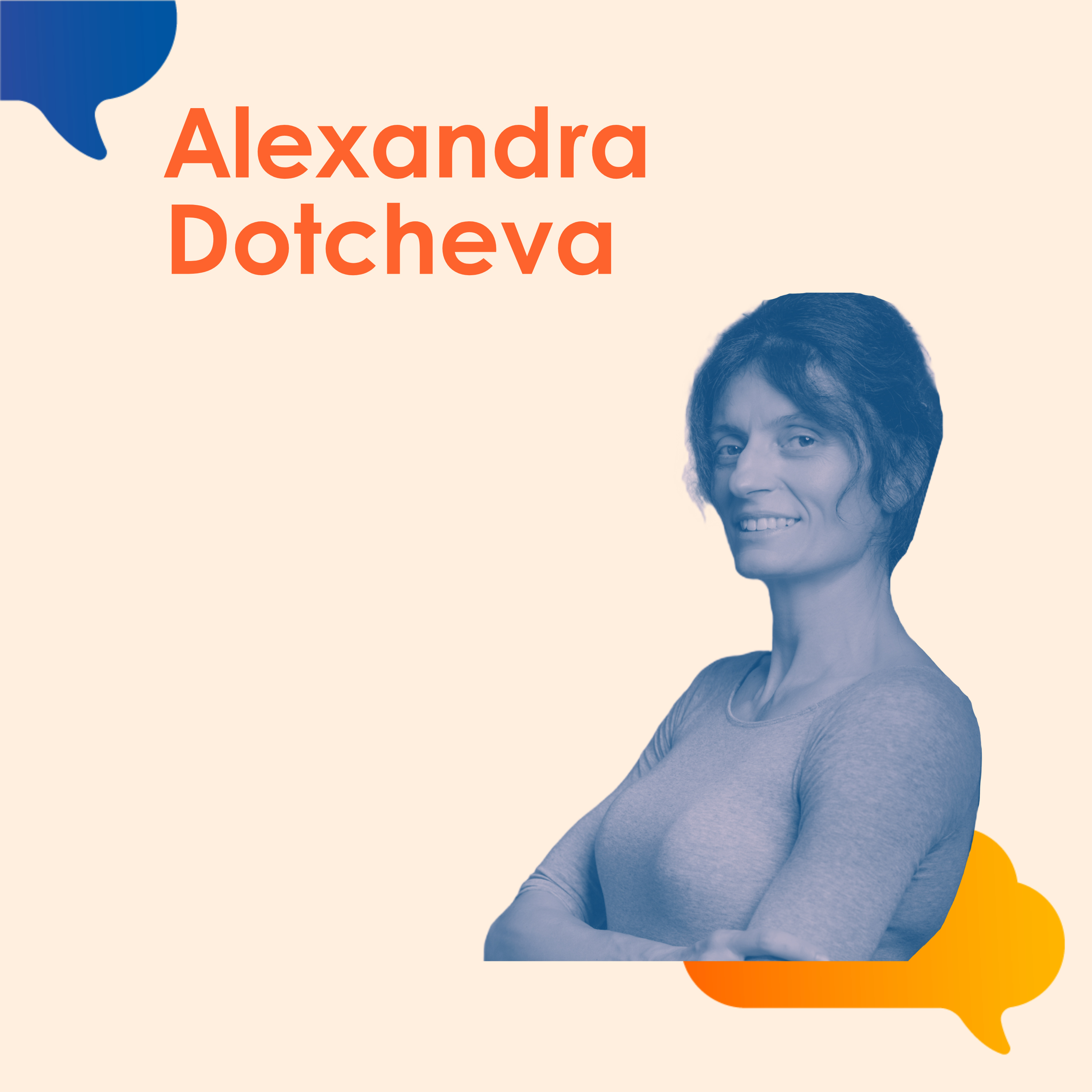
About This Episode
Holistic wellness goes far beyond mindfulness and bubble baths. In this episode, Alexandra Dotcheva shares how she practices what she preaches, and how true wellbeing comes from strengthening every pillar of your life: your health, your finances, and your self-confidence.
Alexandra explains why optimizing nutrition, detoxing both body and mind, and cultivating disciplined fitness practices are essential foundations for long-term vitality. We explore the role of financial independence in helping you live on your own terms, and how confidence grows when you face problems instead of running from them.
If you’re curious about how small, intentional steps across all areas of your life can create lasting transformation, this episode is a powerful place to start.
About Alexandra Dotcheva
Alexandra is a registered nurse, real estate investor, fitness advocate, and author of It Really Is Simple: A Holistic Approach To Self-Confidence: A Practical Guide. After overcoming decades of low self-esteem and major life transitions, she now helps others build holistic confidence through health optimization, financial independence, disciplined habits, and intentional self-leadership.
You can connect with Alexandra on her website https://www.holisticselfconfidence.com/.
Mind Blend is all about real experiences and meaningful conversations—through sharing these insights, I hope to inspire and empower you as you navigate your unique journey.
I’d also love to hear from you! What resonated with you today? What topics or guests should we feature next? Let’s keep the conversation going—connect with me on LinkedIn @ karenkchong and @Mind-Blend. Prefer to connect more directly? mindblendpodcast [@] gmail.com.
Follow Mind Blend to get notified when new episodes are released!
Until next time, stay curious, keep exploring, and let’s continue to blend our minds and discover what’s possible.
0:00 So we talk a lot about mindfulness these days, like slowing down, being present, finding calm. But what about the other parts that make your person a whole? The body, the confidence, the financial freedom that lets you live life on your own terms. So my guest today, Alexandra Tocheva, doesn't just talk about balance. She lives it. From music to medicine, fitness to finance, she's built her life around the idea that true well-being means taking care of every part of who you are.
0:35 Welcome to the show Mind Blend. I'm your host, Karen Chong, and I'll be diving into the minds of incredible people, each an expert in their very own way. Together, we'll uncover insights and share ideas so you can be inspired and empowered to navigate your own unique journey in life. Ready to get curious and discover what's possible? Let's blend. Hi Alexandra, welcome to Mind Blend. Thank you so much for having me, Karen. Pleasure to be here. So in the intro, I've said many things that don't seem to belong in the same sentence, like what do you mean music to medicine and fitness to finance?
1:16 Can you share a little bit about your journey, how you got to what you're doing today? Absolutely. Of course. Well, I was a musician, professionally trained physician for 29 years of my life, and then I switched to nursing. I'm a registered nurse. I got this education in the United States and I came from Bulgaria to the United States initially as a violent student and then once I entered the workforce as a nurse. And so how most of the nurses lived, I decided I also had to learn how to be financially independent.
1:49 And that's when I got simultaneously into real estate investing and created a gradually 3 real estate parental businesses. And the coaching part came last because I, I published a book in 2021. It's called, it really is Simple, A Holistic approach to self-confidence, which I thought was very important because I started from a very, very unconfident individual and I build the confidence with getting into all these different aspects of knowledge which I never believed I could. And then the coaching business naturally came into existence as well.
2:27 So today, are you more focused on the coaching business? Are you still doing nursing? I am, because it's very important to learn what to avoid in medicine, and I learned tremendously from my patients. I can stop working at any time I choose, but I know I can fall into old, lazy patterns very easily. So I don't allow myself to quit quite yet. But I can, because the real estate investment businesses have flourished amazingly well. I am so glad to hear that I'm jealous, but I'm also very glad to hear that you don't have to be working, but you're still doing it.
3:02 So I want to ask you a little bit more. Why nursing from being a musician? Because when the financial crisis hits America in between 2006 and 2008, when the orchestra started bankrupting left and right, I had to face the fact that I was not at the level of Ana Sufi Motel or Yo-yo Ma, the cello, you know? Equivalent to. Many, many other amazing musicians. I was not competitive enough and I had been struggling with pretty, pretty heavy stage fright for well over 15 years at a time. And I also wanted to feel useful, which I wasn't as a musician.
3:40 When I was 32 in 2008, I had spent eleven years in college plus twelve additional years in a specialized music school. So I wanted to feel useful and I wanted a career that didn't require additional 11 years of school and career that was in demand. Plus I always loved biology as a child. I just never had the opportunity to develop that love because I was very narrowly specialized as a musician, so that's why I chose nursing. Wow, That's an acute turn from a musician to nursing. Yeah. Do you remember, like, what was the mental burden or what you had to overcome to take that leap?
4:21 Yes ma'am, that's something that to forget, I have to develop very heavy Alzheimer's. I will never forget that feeling in the vacuum I felt for a week or so when I decided to drastically switch careers into nursing. Because when it hits you on the head that you are really useless of what you have been doing for almost 30 years, it's a very heavy feeling of an accomplishment. You criticize yourself for not having faced it earlier, which I knew it five years prior to taking the decision, becoming a nurse, but I just wasn't courageous enough and honest enough with myself that things weren't going to get better.
4:59 But I had to take the change myself and it was personal responsibility. It's a very heavy feeling for quite some time until you settle into it. And I remember playing these concerts for the week or 10 days after I switched to deciding that I had to do something different in my life. And so I was playing these beautiful pieces, music classics, you know, it made zero sense to me. I felt completely out of place on stage among my fellow musicians. I see. Yeah, like your your body is playing it but your heart is not in it type situation.
5:31 Wow, that's tough. But you took the courage. You took the lead and you entered the nursing world. Describe this different world that you see and how it changed you. It was a great cultural shock for sure. The first the first couple of years the learning was extremely exciting. I excelled at all the classes because I was studying 12 to 13 hours a day. I basically turned the hours of my violin practice into studying the textbooks. I pre ramped many textbooks 2 three times before the classes even started because I had no scientific basis, let alone in English.
6:04 But once I entered the workforce and I saw how there were more nurses and doctors that I could count that carried every disease known to men, yet they were allowing themselves to educate others how to live healthy. The hypocrisy of the healthcare system. The horrific and healthy food that was served to patients and their visitors in the hospitals and the entire culture of keeping patients chronically sick by disease management rather than disease reversal and how they were made permanent financial assets to the healthcare system.
6:42 So there were lots of aha moments. I first entered a workforce as a nurse. Of course, it helped with my partner, my amazing, you know, boyfriend of so many years now. He was a nurse of 15 years at the time, and he helped me see all these things that I probably would have taken me four or five years to see because I was naive enough to believe that it was wonderful the way the healthcare system was designed and to help people and all that. Yes and no, and mostly no, unfortunately. Yeah, The thing is, you're part of it too, because you live in the United States.
7:18 Yes. The responsibility that comes with that, yeah. Like, and it's not just responsibility, it's if you were to get sick you would get the same treatment. Right did. That open your eyes up. Very much so, yes. Yes, very much so. So that's when I switched to home care nursing. So I could actually see the patient one-on-one much more frequently than in the hospital, in a slightly better mental state for the patient when they're in their house on their turf than in the hospital when they're really acutely sick.
7:47 Of course, not that the hospitals don't discharge patients prematurely all the time, but still the patient is under control in their house and I can educate much more effectively. And of course, the whole revelation of how the healthcare system worked prompt me very quickly to truly live by what I preached, because otherwise I will never have credibility. So I completely refined my diet, my fitness routines. Of course, I was doing martial arts at the time for quite some time already, But the diet, the exercise routine, and then of course the mental health also had to be refined to the point where I it truly could convince people that things can be much better under their control by giving them leading by example of what I was doing.
8:32 Can you tell us a little more about how you are optimizing your health? Yes. So I mean, truthfully, in 2000 I was 24 when I stopped eating all sorts of animals. I mean, but actually fish I ate at the time, but mammals and poultry because I turned to yoga before I became a martial artist and I said, OK, I'm going to become a vegetarian because fish is healthy and all that stuff, right? But I eventually realized all the toxins operating the animals and not just the farm raised animals with all the drugs, but also the ocean leadfish because of the contamination of the ocean elastic mercury radiation in the Pacific Ocean from the ocean of planet disaster.
9:15 So you have to face these truths and connect the dots. And then my boyfriend unfortunately developed pre diabetes and he had had high blood pressure since age 32 with very high cholesterol, which he attributed to hereditary factors. And then we started talking, OK, you inherit some predispositions, but also the lifestyle of those people who made them, they made them sick. And so when he developed the pre diabetes, that got him really, really concerned. And then I said, OK, so let's go plant this.
9:43 Let's let's trying vegan and not processed vegan products but organic whole from the soil. We prepare it, we ditch all the restaurant food, stop eating out and all that stuff and watch how in 3-4 months his hemoglobin A1C fell to way under normal pre diabetic level. So he was no longer pre diabetic. And then he said I'm sticking to that diet. I said who the heck you are and I'm with you. And he actually quit all the animal products completely cold Turkey. He hadn't stopped eating mammals and poultry 17 years before becoming vegan like I did.
10:19 He stopped completely cold Turkey and we've been extremely healthy since. It's been 8 years already, whole organic vegan. So that was the nutrition aspect of the optimization. Well, good, good job. Like, kudos to that. And because you're in the nursing field, the medical field, because you, you see the damage that it's doing to people. When I was living in the States, I also learn more vegan because for some reason, you could say it's media, but I just had no desire to touch animal products because of all the stories that I've heard.
10:54 Oh yeah, yeah. And also the processed food. Now that I live in the UK, the food is less processed. There's less additives to it. Not to say that it's completely whole, but I see the difference already. The same tub of yogurt, the sugar content is still more, The calories is still more in the state. So fortunate for me, I have more access to less processed food now. But a lot of our listeners do live in this state, so that was a hell of aspect. What are the other aspects in your optimization? Fitness, fitness.
11:29 I have very stiff fitness routines. Since I was a martial artist. I learned a lot about cardio and weight lifting and so I do very heavy routines, two, 2 1/2 hours a day, four to five days a week. And I'm very strong on high resistance cardio and and my own weight lifting. Like I love to do 80 to 100 pull ups within a single gym session. It really it takes a lot of discipline and you construct a way to do as many compound exercises as possible because they're truly the ones that are the hardest because they address the maximum amount of muscle groups in the single exercise.
12:10 I don't isolate muscle groups, if that makes sense, because it's just not a whole approach to fitness. But also they're very demanding exercises and they are excellent for building a harmonious body, strong in every aspect. I'm a huge on lung power and hard power and agility endurance, endurance because I'm 49, I'll be 50 early next year. And I really absolutely have no intentional succumbing to the notion that all we are with age, we have to slow down. On the contrary, you have to speed up because you have to serve as an example to those who won't slow down because if you slow down, you will die sooner rather than later.
12:51 So it's it's really about keeping the vitality of your body, but it has to be truly, truly, truly underlined with excellent clean nutrition. And I just can't say enough that whole organic plants don't do to people what's animal products too, because they don't they don't develop chronic diseases. I have been a nurse for over 15 years now and my boyfriend has been a nurse for 32 years. We haven't had a single patient who is a whole food organic vegan in our entire practice. Like 0. Zero, right? So what does that tell you?
13:28 People like call for organic Venus. We just don't get sick as readily as other people do. Can we get into a car accident? Absolutely. But that's an acute condition. Yeah, that's a very good chronic. Conditions that keep you sick for decades. Decades doesn't happen. It's just I'm yet to see one. Yeah, chronic diseases. There's something unnatural about it to abuse most of. Them are man made. Yeah, absolutely. Absolutely. Yeah, like I have recently heard a lot more emphasis on strength, like strength building.
14:02 So it used to be like cardio, cardio, cardio, and then you know how there's different trends. And then more recently there's more focus on like strength training. What's your view on cardio in combination with strength training? That's what I do every day. Yes, absolutely. Each has a place in your in your body, in your fatality. Cardio. I'm adamant about cardio. I see tons of weight literatures that dread cardio because they don't like to sweat as much as cardio will make them sweat. And then they're afraid they'll lose their muscle mass if they don't do cardio.
14:35 I mean, that's just dumb. You have to train your heart for endurance. You need to kind of nourish these primal instincts that we had to run really fast from bad animals in order to eat us. And that was in Africa. People who used to, to hunt for their food. There was no morbid obesity. There was no nothing like the diseases of contemporary wealthy people and the advanced and developed world like type 2 diabetes, cancer. These are the most profitable diseases and they stick with that for for the rest of your life, say, oh, you're going to maintain it, you'll never heal.
15:14 That's, that's, you know, nonsense. So weight lifting for bone strength, for muscle strength and cardio for heart and lungs. And you can combine, there are weight lifting exercises that are also excellent cardio exercises. I mean the brain, it does tremendous amount of work during fitness to do it right and to not hurt yourself and to get the benefit of the exercise rather than harm yourself with it or get no benefit whatsoever. Because there are three possible outcomes of exercises. Benefit, no benefit or no result at all.
15:47 Benefit, harm or no result at all. So it's your choice what to do and how focused you are during each fitness session. Because I'm sure when you go through the fitness, you've seen lots of people who just go through the motions, like just to score presence there. But you can tell when somebody's exercising with intensity and somebody is going through the motions. So it's easy to spot the people who are truly dedicated. Yeah, the form is important. You see people doing planks, but it's they're it's.
16:16 Not. Flat at all? It's like, what do you call them slides? Like their butt is always. So yeah, form. Doing it intentionally with the right form is more important than just being at the gym and like running on the treadmill. But you're not really doing it properly. So do you have clients that come to you for your coaching around the nutrition and fitness aspect? Well, I do because in nursing, you know, you have, you supposedly you know all these things if you're self disciplined and practice what you preach.
16:49 I also am very big on functional medicine, so endocrine health and ill health and the gut health that most regular practitioners don't focus on at all because it treats treats symptoms rather than doing these more sophisticated labs to tell the person how their gut is working or not working and then how that affects their immune system and their hormones. It's a huge, huge field, growing field right now, which is fascinating. That's absolutely not something that I learned in nursing school. So the desire to develop yourself attracts different types of clients and patients in your practice.
17:26 And but see with my coaching, because I insist that people not only optimize their health, but also learn how to invest in tangible assets to optimize their financial health. If they want to be my clients, I want them to understand that everything is connected in life, health, wealth and relationships. Extremely important because your health decisions are very, very vastly influenced by the people you're are around, not just the ones in your house, but at your workplace and the your choices of friends to socialize with.
17:58 So we address all these factors because people get influenced by the wrong people with best intentions all the time and and that's not making the best decisions for themselves. And then they wonder why they're sick and why they're poor and why they're unsatisfied with life. So it's much more than just the health aspect in the holistic self-confidence approach. Yeah, let's dive into this economic side of how someone can live the fulfilling life. So, tangible asset, what are some examples of tangible asset that you teach people?
18:30 These are assets that you can touch, you can see, you can hear, and you can fix. I'm very heavily invested in real estate, obviously, because that is the best tangible asset you can acquire and it's still pretty affordable if you have the discipline in the plan, how to and and knowledge how to chase the deals that are truly affordable that will make your money right from the start the moment you purchase. OK, so that was another learning curve of course, that I had to undertake that lots of people don't want to undertake, unfortunately, and they invest in so-called easy stuff like volatile fake assets in the stock market.
19:06 And, and I'm not saying that the stock market doesn't have its place, but it just said that many financial coaches, they really focus on the stock market aspects and never mention owning real estate to increase not only your net worth, but like if monthly secure cash flow when you manage assets appropriately. And it just boggles my mind because it's just so obvious in plain sight. You can buy it in your own neighborhood. You can buy it in the neighboring neighborhood and manage this thing and have this cash flowing assets for life and for generations, not just for the time being.
19:47 And the financial aspect is important because it gives you choices. It strengthens your ability to be astute about your habits. It straightens your spending tendencies if you want to learn because if you start from knowers where I did because when I came to this country, I had nothing but like very big hopes on student visa. OK. So I'm not somebody who was here in the tons of cash periodically and. I had no idea about finances can just like I have no idea about science when I started nursing. So that's why I tell all my students in the readers in my book, if I could do it, anybody can because I was the person who never believed I could learn anything besides music because I had not progressed the way I wanted for 29 years.
20:36 I never thought I could progress in anything else since I had put so much time and effort into a career that wasn't successful. And you know, here I am today financially independent. So if I can do it, anybody can. But tangible assets are that assets that you can touch, you can see, you can visit, OK, that those are tangible assets. So for Someone Like You mentioned, not everyone is have this mindset, they may want to do the easy stuff. What are some of the things that you normally start telling them to open their minds and start to consider tangible assets?
21:12 I ask open-ended question as to what their goals are within the next 10 to 15 years because people want the quick fix but they rarely think about long term, which is a huge mistake. The people that are tremendously financially successful really start with the long term goals first because that'll give them a much broader picture of they want to accomplish in life and how fast they want to accomplish it. That's the other question, and most people, you'll find they've never thought about this at all because they're just unhappy with their current miserable job situation and they want out as soon as possible.
21:45 So then we talk about career choices. That's the other very important aspect, financial prosperity, because you need to be useful to society and appreciate it and sought after to have this income at first that will be keeping your float very well while you collect money to invest in tangible assets. And that whole connection that people rarely see how a valuable they can be with the career that they are currently in, if only they choose to do so because you chose a career for a reason. Now, if you chose your career for all the wrong reasons, we're going to discuss that too, OK?
22:23 But the money has to come from somewhere for your tangible assets. Unless you're willing to pursue seller finance deals for a very long time and start with minimal cash flow. If you don't think any mortgage or down payment on your first property or second and third property, well, that's requires a whole different set of skills. OK, so the mindset is really depending on your goals that you and your responsibility to think about these goals. And how do I know that? Because it was very hard for me too.
22:53 I, I read like 10 stuff, like almost 10 confidence building books and success books. And lo and behold, they all talked about five year tenure and 15 year goals to write them down or read them regularly. That's used to aggravate the heck out of me because it was a different sort of independent thinking responsibility that wasn't tied to what other people's thought about taught you and their advice and everything. You have to actually figure it out yourself. And it's hard. It's very hard when you have lived under the influence of other people's opinions for decades.
23:23 That's what changed you to your current way of living. And once I help people understand that it's a very liberating thing and yet more responsibility and obligation towards yourself and your integrity. And then the the brain unplugs you release the brakes and you create these goals. And then they realize the value of tangible assets versus the other assets that are much more volatile. And they'll learn strategies in either environment. But then they are willing to dedicate the time to learning and investing in themselves in the 1st place with financial education.
23:59 Yeah, like it's very important to make your clients aware. And also they themselves need to buy into it because you're not there 24/7. You're not there to watch their every move, watch everything they eat. Like you're not their trainer in the gym. So they really have to be that themselves. So while you were answering, you mentioned about living under other people's opinions. And earlier you mentioned that you had really low self-confidence. I want to see how you built the confidence. I build the confidence by getting really sick of my own lack of confidence, And every major decision I made was faced with a lot of skepticism from the closest people, like changing careers, go to nursing school.
24:48 Yeah. Oh, it's a very hard profession. Yes, it is. And that's the point right before the nursing was the karate, the martial arts, I, I practiced several martial arts. But when I started martial arts, which was something I really dreamed of since I was nine years old, but it was completely suppressed in the family because I was a violinist. And how can I do martial arts? My fingers, right? No way. But that was badly surprised when I was a child, because in Eastern Europe some parents came to be very blunt with their opinions and hurtful, sometimes with the best intentions.
25:19 So then the martial arts was met with a lot of skepticism. I did it regardless. One of the best decisions of my life for confidence building. Then changing careers. Skepticism from everybody. Best decision of my life for confidence building because changing careers you can boost your confidence like you can't imagine. Of course, you need five to seven years to appreciate that this is the starting point. Then real estate, tons of cosmeticism from France. Oh yeah, you lose your money. It's very risky.
25:49 Well, people who don't take risks don't go anywhere in life. Another one of my best decisions of my life. So you have to counter the opinions if you are deeply, deeply convinced that you're curious enough to take the risk, so curious that it makes you excited to take the risk regardless of the consequences. And that's how you battle low self esteem. And to hell with it, I'll take the risk, I'll jump in that huge crevasse whatever, and see what happens. Of course educate yourself beforehand, but the real situation will show you that you can never educate yourself enough.
26:28 And that's why you'll learn for the rest of your life. Lifelong learning, and that's how you learn to really solve problems. Yeah. For real. And first of all and foremost your own problems with your mindset. And then everything else falls into place. And then you can teach others how to solve problems. But you don't tell people how to solve problems unless you have solved your own problems 1st. And that's what builds credibility. Yeah, you also mentioned it earlier. Like, you have to practice what you preach.
27:01 So that's why you're doing all these things that you're coaching your clients on. And you said when you moved to the States, you had nothing. And I'm sure you had a lot of fear and anxiety. How did that motivate you? At the time, I didn't have a lot of fear. And exactly, I was young. I was 24. You, you barely know anything about life when you're 24. So you're just excited. You're just excited, full of and then life starts hitting you on the hands one piece at a time. Reality, reality. Especially understanding the limits of your own capabilities and how to go around them.
27:39 That takes a lot of courage and learning and trial and error. So I wasn't really that anxious when I came here. I was excited, but the anxiety came when I saw that I wasn't progressing the way I wanted through my masters and doctoral degrees. I mean, I was giving decent recitals. I was succeeding academically. But when it came to orchestral editions, the feuds paralyzed me on the stage behind the curtain. And that that was where fear and anxiety became very obvious to me, that I had to do something about it to make it work in my favor instead of against me.
28:18 But with the violin, I had already accumulated a lot of really, really bad history. And much as it seems very hard and scary to completely change fields, I opted for that for my own benefit, to start completely from zero in the field where nobody knew me and I didn't know anybody. So I could prove myself from Ground Zero up. And that worked for me better than trying to be the dead horse with the other career that had taken 2629 years of my life by the time I already entered the workforce as a nurse.
28:54 So this type of anxiety helped me actually rebuild myself. I'm really, really glad to hear that because that's not the case nowadays with a lot of cases of anxiety. It paralyzes us, so it makes us defenseless even like we can't. We can't do anything to help ourselves. And that is because most people refuse to really understand their anxiety. What do you mean they? Look at it very superficially. What scares them? And then they run away from it. But why does it scare you? Is this rational? Is it completely irrational?
29:29 And how can you benefit from the anxiety when it tells you that 90% of what you're afraid of is things that you know you should have been doing and you're not doing? So that's when anxiety becomes your ally. It becomes a friend. But you have to understand it so you're understanding yourself. I practice meditation several times a day now. The anxiety is not an issue anymore. It hasn't been for a very long time, but it was like seemingly forever. And when I when I understood that anxiety was telling me something important about myself, and when I finally became willing to listen to what actually telling and face it, then it started becoming more and more under my control.
30:12 To briefly describe how you overcome it, is it more you learn to cohabit with your anxiety and sort of like, OK, I I hear you, but now I need to focus on this important thing in my life. Would you equate it with that? Yes, to a great extent, because anxiety tells you what the things you should, the actions you should have taken that you haven't yet. So when you see a problem, you don't procrastinate, you just solve it right away, start working towards solution, achieve the solution, then face the next problem.
30:43 And the more problems you solve of your own and then help other people solve their problems by seeing their perspective, the more in control you are of your anxiety. And then eventually it, which is kind of almost ceases to exist. It's a very mild level which is necessary for learning. Yeah, OK. But when you solve things one at a time and then collectively everything that gives you confidence because OK, there is a big problem seemingly now something very annoying, very distressful, but OK, I've solved 50 problems like that.
31:13 Yeah. So there is no reason I won't solve this one. Let's get it done. Done. That's it. Yeah, there is no more anxiety, but people run away from problems and they don't realize life is all about solving problems. Yeah. Not necessarily creating them, but solving them because there are plenty of people who create problems for you. So you can be very confident that people will help you in that way. So the way you react to it though is what's important in your anxiety control. Think about how much you grow after solving 10 problems, 20 problems, 50 problems.
31:46 So we have talked about so many things in life, like each one of moments can be like a whole series that's. True, that's true. So for someone who isn't in the best health shape, may not be in the best financial circumstance, may not be in like the right mental Wellness, what's the first step they should take if they do want to improve their holistic well-being? They need to sit and honestly discuss what they want to achieve with their health, finances, relationships and everything. Because once you have a clear picture insight, then you can act on it and you're less overwhelmed.
32:30 But yes, you have to tackle everything if it's all a problem. If you neglect one thing, the other ones won't progress properly because they're going to be on the back of your mind. OK, so I'm working on my health, but I don't have money for basic necessities. So we have a problem here. We have to tailor your health routine and your nutrition. And there are extremely cheap problems that are highly nutritious. When you cook them, they expand threefold. Beans and grains and legumes and grains come to mind.
32:56 Organic with tons of minerals and vitamins and nutrition in them. So we, we start with the easiest. My principle in a vegan that is you start simple and you keep it simple. It it's never worked better finances. It's a little bit harder to apply that approach, but we tackle everything because if you are in poor health, that means you're paying a lot of money for medical bills and medications. So we need to create a financial strategy for you as well. And many people who are very sick, they also tend to smoke a lot because that's type of a stress relief and that a lot of their paycheck goes there, right there in the cigarettes.
33:30 So I mean, tons of habits like that, you know, coping mechanisms that are really counter mechanisms. Unfortunately, they don't create any productive results. So if they're willing to face these problems, they will solve them. And they already know the answers to most questions. You. Just gently lead them towards them, but let them discover that so it's their idea rather than yours as a coach and things fall into place. But you have to tackle it all at once, unfortunately. I mean, you can start easily in each aspects, but each aspect has to be addressed because they're connected.
34:06 And once they see the connection, it's a big aha moment because they'll realize how fixing all of these will help all of these simultaneously, and there is less resistance than to the work that has to be done by them. Well, so many golden Nuggets of information in this episode. Thank you. Thank you. Thank you so much. So for this last part, let's play a game. Rapid fire questions. OK, let's see, I'll have to. Just get reaction. Imagine yourself waking up one day low on energy. What do you do? What's your go to fix?
34:42 Oh, I take a cold shower immediately and I do 100 squats with my own weight. Fast. Yeah, yeah, yeah, I tried that. I tried the ice bath last week. I can see the benefit of it. No, no. Go into the cold shower for three minutes. You will not have low energy after that. That's a really good tip. OK, next one. What's a healthy habit that you secretly think is overrated? Overrated kiddo diet.
35:13 It's a another excellent excuse for eating crap as far as I'm concerned. Yeah, great. Good thing I'm not on it. So when it comes to health, people think about like detox too. We haven't talked about it in this episode, but I know you're a proponent of detoxing. What is a detox? What should people detox from that has nothing to do with food? Well, heavy metals, right? You have plastic components, you have decreasing glutathione from your liver with age. There are also any medications, air toxins, water toxins, full house water filtration system, osmosis filter and whatnot.
36:00 But the foods themselves, even in the organic industry, that's growing like crazy and starting to cut corners. The food also has toxins. Your head's excluding from food. But I mean, you eat food everyday. So I do detox everyday. I'm a huge proponent for the detox. Yes. And there are many ways to detox. I have chosen A relatively inexpensive way that I discuss in a great extent in the 7th chapter of my book, which is all about detoxification. But you can't ignore the fact that you're exposed to between 20,000 and 2 million toxins every day.
36:37 Wow. It's a huge number and it is unavoidable. Unfortunately, we can't avoid it. OK, so much as we try. Of course, we've minimized all chemical exposures in our house and whatnot, but if you walk around in the real world, you get toxins and the whole thing is with your body. It's is so overwhelmed that your liver, which serves well over 200 functions in your body, has to be supported on a daily basis to perform at its best. SO glutathione increase is one of your best focuses. Then cleaning antioxidants from your body is a huge focus as well.
37:13 And then of course, if you have a specific overwhelm that you know through very specific labs, you have to focus on that too. And lots of people don't know because they function at high capacity, but like almost at high stress modes, survival modes, and most of us do that without realizing it, and sometimes in backfires very, very badly as we age. So you have to be mindful of these things. So I'd love to discuss immune function, hormone function, gut health. These are the things that are extremely interconnected that your regular doctor won't tell you about at all, because the doctors themselves don't eat healthy and they don't pay attention to these things.
37:51 They didn't learn about these intimate interconnections in your body and mental health in medical school because it all focuses on pharmaceutical drugs, right? It's the pharmaceutical companies that determine fee curriculum of the contemporary doctors. So none of this is addressed, unfortunately. And these connections are rarely explained to the doctors. They're even more seldom explained to the patients themselves. And then you have doctors that are very tight specialists. They only focus on their field and they rarely communicate with the other doctors for the patient.
38:22 And the patient has 6 or 7 specialists. That's a disaster picture right there. And lots of my patients are like this. And it's just very, very sad because you know how we used to have these general practitioners when we were growing up. They used. So much more than today's general practitioners and they are just amazing at connecting body systems and that doesn't exist anymore or it's very rarely seen. And this is where patients are so responsible for their old health. 100% of duty education and be willing to research and constantly question what they're told by the so-called authorities.
38:58 OK, because we know what happened when the authorities told us to lock ourselves in our homes and take a highly toxic drug that killed more people than it's helped. OK. So thankfully I've never been susceptible to such suggestions. But lots of people your tactics. Yeah. And they just do the dumbest things in their lives, including with their health. And it's just very, very important to educate. So to come back to your original question with the detox, you have to practice mental detox, emotional detox and physical detox every day because you get exposed to these toxins every day.
39:39 And so if you don't address it every day, you're not in in pace with the degree of toxicity that you're exposed to. So again, you have to create that wonderful time management skill to address all these things every single day. Otherwise it just becomes harder for you. Yeah, they just pile up. OK. What is your definition of true wealth? Oh well, that's well. That can replicate itself every month while you sleep. Health is the biggest form of wealth. That's true wealth. So excellent, optimized health and financial freedom in relationships that don't get in the way but nourish you and allow you to nourish them.
40:22 That's true wealth. Yeah, like a golden triangle. OK, last one. If your younger self could see you now, what would she say? If she would laugh because she would never believe that that will be possible to accomplish. My younger self was not very wise. She would be like, oh, I had a nice, nice dream. But yeah, no way. That's what she would say, unfortunately. Oh, so she's like their family too? She was really dense, very, very dense. OK, well look at you today, but you have developed so much wisdom.
40:57 You're using your knowledge and wisdom to help the people around you. So glad you're on mind gland. Really enjoy this conversation, Alexandra. Well, likewise, Karens, thank you so much for having me. I hopefully we helped your listeners get some new insights and get encouraged and inspired. Yeah, I will leave your info on the show notes, but what's the easiest way for people to get in contact with you? After my website, itsholisticselfconfidence.com, no dashes, holistic selfconfidence.com, the book is available there, The coaching material, I mean the explanation of my coaching strategy.
41:33 My social links are on the website as well. The book, the physical copy, is available in the US only, but the ebook version, which is significantly less expensive, of course, it's available worldwide for purchase, and not just on the website but also on Amazon, Apple Books, Smash Words, and Barnes and Noble. OK, people have accounts there, that's fine. But the website is the easiest way to get a hold of me because they'll see my YouTube channel there and other media appearances and contact information.
42:00 Everything. Holistic. Selfconfidence.com. Yeah, there's, like, like I said, every single topic. It's a rabbit hole. There's so much to explore in every single aspect of the health optimization. The listeners hope you learned something useful today and it'll make you think twice and maybe start changing some habits. Thank you, Alexandra. Thank you, Karen. Thank you so much.
42:25 Thanks for listening to this episode of Mind Blend. If you enjoyed the conversation, don't forget to follow and share it with anyone who needs to hear it. And let's keep the conversation going. Connect with me on LinkedIn or leave me a comment. Until next time, stay curious, keep exploring, and let's continue to plan our minds and discover what's possible.

 Spotify
 Apple Podcasts
 Amazon Music
 Castbox
 YouTube
 Castro
 Goodpods
 Moon FM
 Overcast
 Pocket Casts
 Podbean
 Podcast Addict
 Podcast Republic