About This Episode
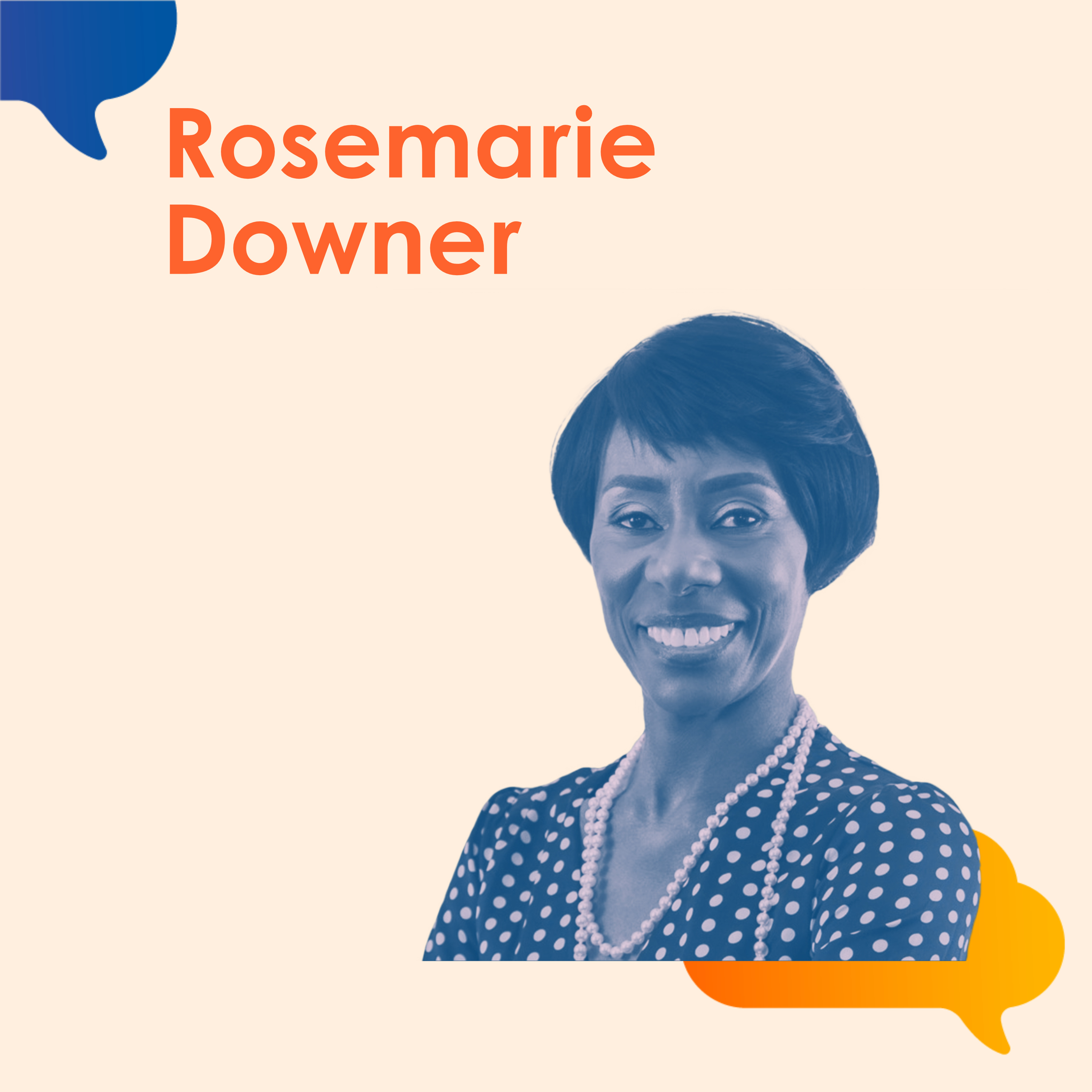
In this episode of Mind Blend, I speak with leadership coach and author Dr. Rosemarie Downer, who offers a surprising and powerful lens on leadership through the metaphor of the giraffe.
Giraffes don’t rush. They don’t make much noise. And yet, their presence is undeniable. They see farther than anyone else, learn from places others can’t reach, and lead in ways that create independence rather than dependence.
Why vision — not volume — is a defining trait of effective leaders
How presence can carry more authority than constant visibility
The difference between managing tasks and truly leading people
Why great leaders develop others to stand on their own
The often-unspoken loneliness that comes with leadership
What we can learn about resilience, growth, and perspective from nature
This conversation is for anyone in a leadership role questioning whether they’re on the right path, and for anyone searching for the kind of leader they can truly trust and follow.
About Dr Rosemarie Downer:
Dr. Rosemarie is an author and expert in the fields of leadership, spiritual growth, and personal development. With a passion for empowering individuals to reach their full potential, she has authored numerous nonfiction books that inspire readers to cultivate leadership skills, deepen their walk with the Lord, and embark on journeys of personal transformation. In addition to writing, Dr. Rosemarie is a creative force behind therapeutic cards and workbooks designed to facilitate introspection, healing, and growth.
You can find her book, Leaders are like Giraffes on her website. You can also connect with Dr. Rosemarie Downer on https://booksbyrosemarie.com/, instagram and YouTube.
Mind Blend is all about real experiences and meaningful conversations—through sharing these insights, I hope to inspire and empower you as you navigate your unique journey.
What resonated with you today? What topics or guests should we feature next? Let’s keep the conversation going—connect with me on LinkedIn @Mind-Blend, Instagram Mindblendpodcast or mindblendpodcast [@] gmail.com.
Follow Mind Blend to get notified when new episodes are released!
0:00 Leaders, sometimes they're meant to be leaders, but because of lack of vision, they become managers. Managers are task oriented. So when you when you don't have a vision, you're just getting the work done. You just want to get it done now, not thinking about where you want to be later on. A leader has to have vision, which is a better site of the future, though it's not in reality. You can see it as the leader, and with that vision, you know where you're taking the people. But if you don't have vision, you're just getting this work done today, this project done, this deadline met, this budget requirement met, and then you're good.
0:46 And then the next one shows up without thinking of the day.
0:52 There's a reason why some people walk into a room and everything shifts, even when they say very little. It's not confidence, it's not authority, and it's definitely not volume. In today's conversation, Doctor Rosemary Downer helped me see leadership in a completely different way, through a metaphor I didn't expect, one that has very little to do with titles and everything to do with perspective, patience, and developing others. What's the metaphor? A giraffe? If you've ever struggled to lead or struggle to find someone worth following, this one's for you.
1:35 Welcome to the show Mind Blend. I'm your host, Karen Chong, and I'll be diving into the minds of incredible people, each an expert in their very own way. Together, we'll uncover insights and share ideas so you can be inspired and empowered to navigate your own unique journey in life. Ready to get curious and discover what's possible? Let's blend. So we have talked a lot about leadership these days. How to lead better, faster, more effectively. But what is true leadership? That's what we're going to talk about today with my guest, Doctor Rosemary Downer.
2:17 Hi, Doctor Rosemary. Hello, good day. Good morning for you. Morning for me as well. It's good to be here. Great to have you here. So before we begin, I know that you have had a lot of different experiences in your past, so how did you get involved with leadership and all the things you've done in the past that sort of led you down this path? OK, so I honestly can say throughout my life I've not been able to get away from leadership. So how did I get here? I almost always find myself in a leadership role whether I want to or not, whether I'm hiding or not.
2:59 I'll give you an example. Coming up in school, the teacher may give a group activity, and so the teacher puts you in small groups to work on a project, and everybody's sit, and now everybody's just looking at each other. Nobody's take, nobody's talking, right? Nobody's initiating. I'm always the one to start the conversation. Because I start the conversation, I end up being the leader. It just happens. Is that because you want to start motion start action or do you know why? I think it's I'm just wired to see things progress.
3:32 I'm just wired to see things move, not being stagnant. And that's what a leader does. A leader mobilizes. A leader takes the folks, the constituents, the body, the organization from one level to the next. That's what a leader does. Stagnancy irritates a leader. A leader is always looking way down the road and seeing something better than the present. A leader is always in a state of unrest. So. So, yeah, I always want to just get it done. We have this thing to do. What are we waiting around for?
4:03 So you take that, you take that, Let's get it done. And I think that's pretty much the reason, yeah. So you were born with this proclivity of to start action. I do believe so, yeah. Action minded, you know? Yeah. Movement. Yeah. Yeah, I'm similar because I'm in project management field, so movement progress, making sure things are going is also my core focus. Between You Were Young and Fast forward to today, what are some of the key moments that have led you into getting more involved with leadership and even writing a book about leadership?
4:43 So that's pretty easy to answer because in my adult years, from young adult to adult, I did youth ministry for 30 years. I've LED youth ministry for 30 years, founded a nonprofit organization that power church ministry that served young people from several churches, and that ministry could have easily grown to be a national organization or even international organization. But my biggest challenge, my biggest barrier, were church leaders. Why is that? Because church, church leaders can be territorial.
5:20 They can be insecure. So when they see something growing, they think you're taking away their young people. They think you are doing too much. It's they, they don't see the fact that we can do way more together than you than separated. So you get this silo situation, you get this territorial behavior. So that's that's what I came up against. And before the leadership book I wrote before this one is called is titled The Sell Scarred Church because I talked about 7, I would say scars that leaders make to the church due to poor leadership skills.
5:58 But this particular book, Leaders are like Giraffes came about because in that nonprofit organization that power church ministry, I used to do a conference every other year. I'm called Wow conference, Word of Worth Conference. And in that conference I had several tracks and one of the track was leadership track. And this particular year I needed a facilitator for a workshop and I couldn't find anyone. So I was forced to do the workshop because there was no unfit to fill the the gap. And it I mean, I was busy.
6:30 I'm putting the conference together. I'm, I'm, you know, putting everything together. So I didn't have time really to put a workshop together. And in prayer, I'm like, Lord, I have so many things on my plate right now. I have to do this workshop. I need to know what to talk about. And I heard in my spirit, leaders are like giraffes, just wow, plate and straight. Yeah, leaders are like giraffes. Never thought about the giraffe. Never, Never liked the giraffe. Now they're my best friends. I love giraffes.
6:56 And as I was researching to put the presentation together, I'm like, there's a lot of information here. When I did the workshop, this young man said to me as I was walking out the room. So it was me. That's a lot of good information. You could write a book about this, and I registered it. And there it is. Several years later, I wrote the book. Yeah, I was researching for this episode and I read parts of your book and there are a lot of traits that stood out to me that I was like, Oh my God, I never thought about it that way.
7:24 Yeah. Yeah. So let's dive into a few of those. We won't give it all away. Right. There's nineteen of them that I talked about, so we definitely can't cover all 19 today. But yeah, I do a training on it. And when I do this training, people are jaw dropped. They're like, Oh yeah, I never thought about this. Right. Like. Yeah. OK. So one of them is you talked about vision, you talked about the earlier too, but you talked about vision as a key leadership trait giraffes can see far down the road. So what do you believe most about leaders getting wrong about long term vision?
8:03 Leaders. Sometimes they're meant to be leaders, but because of lack of vision, they become managers. So managers are task oriented. So when you when you don't have a vision, you're just getting the work done. You just want to get it done now, not thinking about where you want to be later on. Vision. A leader has to have vision, which is a better sight of the future, though it's not in reality. You can see it as the leader, and with that vision, you know, where you're taking the people. But if you don't have vision, you just getting this work done today, this project done, this deadline met, this budget requirement met, and then you're good.
8:52 And then the next one shows up without thinking of the big picture. Yeah. Would you say it's like more reacting, less responding? Yeah, yeah. You're not proactive. You're, you're reactive. A person, a leader without vision is is a lot of times in crisis mode because you're fixing things. So if someone is just listening to that, they realize, oh I have been in this manager mode, what can they do to start recalibrating? Sit down and ask themselves why. Why am I doing this? What's the big why at the end of the day?
9:28 What do I want to be said about what I'm doing? Where, where am I going? Where do I want to be a year from now, three years from now, five years from now, 10 years from now? Where do I want to see the organization vision propels? So you've got to ask yourself the long the long term question, not the now question. Yeah. How am I going to meet the budget this month? No, now, now it has to be a long term question. Yeah, that's how you get out of that management mode. And by asking yourself that question, I think the answers help with clarity.
10:05 Exactly. The answers helped to create the path to get to that to that, yes, absolutely. Yeah. So at the day of the recording, recently, there's just been so many things happening in the world. You can say that anytime. But recently there's just been a lot more, maybe because media is more far reaching now. So we definitely see a lot of leaders who are confusing noise with impact. That is so. Good one. One of the things that you also mentioned in the book, it's about how Giraffe moves gracefully without making noise, so silence and leadership.
10:48 So I want to get into that. First of all, what is your take about noise and impact? I love that statement. I love what you just said because it's so true. Social media is awesome. It is. It is like it's almost like we absolutely needed today, but it's also tremendously dangerous, profoundly dangerous. It really is. So it it it gives an individual volume, it gives an individual visibility. It it gives an individual's false sense of importance and impact, right. So you can get on there, like you just said, to make a whole lot of noise.
11:29 They make a whole lot of visibility show, show up doing a whole lot of things, but it's actually noise. It's meaningless. What I love about the giraffe, giraffe is predominantly dumb. When I say dumb, not stupid when I say dumb in the sense of non verbal. Yeah, verbal. Yeah. They just make very little noise, very little sound, and their presence is impactful not because of their size, they just carry that presence. So the day a leader needs to say I'm the head of this organization and I'm saying XYZ, you have a problem.
12:11 The day you have to announce that you are the leader there is a problem. Leaders should walk in a room, Walk in a space where you have dominion over not just any space because you can't be be king over someone elses Kingdom, but where you have or you are led to lead. You should be able to walk in a space and because you show up, things shift your presence because of the authority as a leader that you carry without having to run off your mouth and give a whole lecture and raise your voice. Now that's what I mean by silent but profound.
12:49 Yeah, I was in the Bronx Zoo and they did have giraffes. So I was thinking about today's recording when I was there. Just like, because they're, they're the tallest mammal, right? Like they're just up there. It's almost like they're overlooking all of the animals and ourselves. Yeah, that what you just said. Just because they're there. Yeah, you see them, you feel them. You almost feel like, oh, I can't misbehave. So in the book you also mentioned that because they're so tall, they eat from the top of the tree.
13:25 One of my favorite traits of the giraffe, yes, so the giraffe feeds from they feed from the top of Acacia tree which grows to be quite tall, right? And their knowledge there is eating is aligned to learning. So leaders need to be learning or eating from a place that their constituents don't eat or learn from. Because in the wild, only the giraffe eats from that place. No other animal eats from that place. So if the leader is learning or eating from a place where their constituents is now, they can bring new information to their constituents.
14:07 They can be a leader, They can be a teacher of new information because they're being fed from a, from a, a place that their people can't reach. Yeah. And the giraffe eats almost constantly. Oh, really? Yes, many, many, many, many hours a day. They're eating because all they eat is leaf. They don't eat flesh. And so another lesson from that is leaders should be constant, ongoing, lifelong learners. Yeah. The the eating and learning that is genius. They're constantly learning. They're constantly eating.
14:45 It's important to be constantly learning because if anyone stops learning, you can't improve. Yeah, think of a learner, think of a leader who's not learning. What are they bringing to the people? Recycled information, right. And people aren't unlearned anymore. If they, if they have a leader without knowledge, they they're going to be gone. They, they're not going to stick around anymore. Especially young people, the millennials and younger, They're they're out because they're intelligent these days, more intelligent.
15:12 Well learned. Yeah, Yeah. So like when we when we talk about leaders, we tend to think of like company CEO, prime ministers of countries, presidents of countries. But it doesn't stop there. I feel like we are all leaders in our own ways. For someone who's not in these positions, how can they apply some of these things? So it's not, it's not necessarily at that level, but you said a statement just now, we're all leaders in our own right. I am not sure IA 100% agree with that statement because people are in positions that think of what a leader is.
15:55 It's a leader stands out from the crowd, a leader you recognize the leader, you your leader doesn't blend in, you know, and many of us are in our own space that we should be leading. But if someone walks in that space, they can't identify us as a leader because we look like everybody else. We talk like everybody else, we act like everybody else. That should not be a leader, because a leader is always modeling, a leader is always teaching, whether they are talking or not. Yeah, yeah. So you can be a student, college student, high school student and say, oh, you're a leader in your own right.
16:36 Then you need to be standing out. You need to be need to understand the concept of leader. Leaders have followers, and I'm not talking about follow followers on social media. Leaders have followers. If you are a leader and you have no follower, you're just taking a walk all by yourself. Yeah. So it's it's too broad a sweep to say we are all leaders in a row. I'm glad you pointed that out because given how easy it is now to create content, make a statement, many of us may mistake that, but with mistake followers, quote UN quote with real life followers.
17:17 And that reminded me of another thing that you wrote about in the book, how leaders, they birth other leaders. Powerful. That, yeah, that was the just thinking of the image of that was so powerful. Let's talk a little bit more about that. Like I think you use the analogy of how giraffes were born. So giraffes give birth standing up. Yeah. OK. And their belly is about 6 feet off the ground. So that newborn is dropped 6 feet. Entering in the world is dropped 6 feet, and the newborn lands on its four legs.
17:58 Yeah. So giraffes leaders give birth to independents, not dependents, right? So because a baby being born of all mammals, giraffe babies are most independent than any other mammal. When they're born in hours, the baby is able to walk because leaders or slash giraffes give birth to independence, not dependence. The the myth or the misunderstanding today is the more people depend on me, the better leader I am. No, no, no, no, no. The more leaders you develop, the better you are as a leader. And if you read further in the book, you might have seen it where when that baby is born, the mother is not being abusive, but the mother kicks the newborn.
18:50 The newborn goes up in the air and lands on the, it's, it's legs, but it drops because the legs are weak. It's not strong yet. And the mother kicks the baby again. He goes up in the air and now he lands on his feet. When I read that, I was like, Oh my God, where's, where's, where's giraffe abuse association to rescue these babies. But but it was a way of telling the the baby, life is here, get up and go, don't depend on me, get up and walk. And after the second kick, that baby is able to get up and walk.
19:30 So leaders don't enable leaders. Leaders don't come to rescue me. I mean in time, but yes. Yeah, it sounds more like they coach then. Like the kick, the act of kicking may feel like coaching little. So how would that look like in real life? In real life, so in while I was carrying you, while I was mentoring, while I was cultivating you at training and pouring into you as a leader, I equipped you sufficiently that when I'm beginning to wean away from you as my direct as your direct mentor or coach, you are ready to assume leadership role.
20:10 So now you have stepped into leadership role. Coming out of that womb is stepping into leadership role. Now that you've stepped into leadership role, you meet your first challenge, which means you're going to have to stand up in the middle of it. I am not going to carry you. I'll plot you enough. I'm not going to carry. Now the other thing to notice is that the mother giraffe doesn't abandoned the baby giraffe. The mother giraffe is still hovering around watching over the baby giraffe. So I'm not going to abandon you, but I'm not going to rescue.
20:39 You. Yeah, because recently, like in the last 10, maybe 15 years, you know, there's always this, like you're never ready when it comes to getting to the next level. More and more people, they are given jobs or titles before they're actually ready. And what I mean is they pick might not have experience managing that sort of work or assuming that kind of role, but they're just put in there. Do you think that's premature then? Like is there a lack of development in our younger generations before just putting them in charge?
21:15 Because I see a lot because I have a lot of friends. I have a lot of friends in like, especially technology. It it depends on the role that they're feeling, it depends on what they're doing. And also it depends on after they're put in the position, are they left in the position? Do they have support? Do they have leadership? Do they have mentorship? Do they have someone giving oversight and feedback? So it would be a little difficult to give out A11 size fit all answer because I believe that's going to be situation, yeah.
21:50 Yeah. So it's more like I'm not going to rescue you, so let you do the job. But I'm also not abandoning. You. Meaning looking at what you've done, giving you feedback. And I trust you to do it because I've poured enough in you. You know, I kept, I carried you for, let's say, nine months. And I had the gestation period for a giraffe. It's, it's quite a while. So I I have fed you. I have poured into you all this time. I am giving birth to independence. You were dependent on me then. Now I'm weaning you.
22:19 Yeah. Yeah, I know it's it has really long for the for the baby giraffe to be able to walk. So tie to the examples that we just talked about leaders birthing other leaders, developing them and we talked about coaching the kicking. How do you balance the gentle side of leadership with like the tough love, which is kind of like the SO? The first time the the mother kicks the baby baby calf, she licks the calf when the baby lands before she kicks it. The second time, she she licks the calf. In other words, I love you, I care about you, I want to see you succeed.
23:02 I am here. Then she kicks him again, right? And the baby lands and she again, she doesn't go off, she doesn't abandoned. She's she's in the area watching over even weeks after the baby's born, she watches over the baby. So there is care there. And then they, there's a herd. So if the mother has to go out and look for food, there's some there's there other mature giraffe in the area where the baby is. So you have several mothers bring their baby in the same space and they have a mature giraffe in the area watching over them.
23:40 So there is concern, expressed concern for the baby giraffe. It's not like I just kick you and go about your business. I'm off now. Not at all. Yeah, that is what I'm seeing very often now in the corporate world, like the people are put into position and they're just kind of let to do the job themselves and if they don't produce results. Right, right. So there, there needs to be mentoring, there needs to be feedback, there needs to be like you mentioned, coaching, training, equipping. Even if you bring the person in the position before they're fully skilled up and there is a need for someone to come alongside that person, right, Work with them, train them up and then gradually wean them.
24:25 Yeah, it needs to. Yeah. Are there other qualities of giraffes that I'm sure out of 19 there would be some that resonate more with you or do you have some favorites? Are there other? Favorite ones the the eating and the birth are my two favorite. Another one that that I really like is the giraffe's tongue. The. Tongue OK. Yes, yes, the giraffe's tongue is extremely large. It's a it's big, right? So the giraffe's tongue is like their hands. Oh, they use their tongue almost like their hands. So their tongue has this dark color on it and a coating on their tongue because most times their tongue is extended out of their mouth.
25:11 OK, They use their tongue to wrap around tree tree a branch that cage a tree branch and pull it to strip the leaf off of the branch. So their tongue has to be really strong now. Yeah. The Acacia tree is also very thorny. Exactly. Think about it. Yeah. But if the if the giraffe sees some luscious leaves on the Acacia tree behind a branch that's full of thorns, that doesn't stop the giraffe. They find a way to get around the thorns or through the thorns and still wrap their tongue around that branch and pulled it, pull it to strip the leaves off.
25:54 The the lesson from that is obstacles don't stop leaders. The thorns are obstacles. They don't stop leaders. Pain don't stop leaders. It has to hurt to go through those thorns to get to those leaves. And I really, really like that because in the in the role of leadership, you are going to run into challenges. Yeah, of course. You're right, yeah, you're trying to get from this place to a better place. So inevitably you're going to have challenges, but that does that makes that's that doesn't phase out the giraffes.
26:33 And that's how a leader ought to be. I really like that one. Yeah, talking about giraffes for the last about 30 minutes or or so. It just makes me want to turn on National Geographic. Yeah. I had no idea about the tongue because it's if it's full of thorns as you were describing, like we listeners can't see us, but like my face just Yeah, think. About it. But they keep going nonetheless. Sometimes as leaders, we give up ease, and if the giraffe gives up, they're not going to get those leaves. Yeah, yes.
27:07 No, like there's no food and that's a big motivator. It's funny how much we can learn from animals because in a previous episode I talked about like the our animal brain versus the logical, the verbal brain and the verbal brain. Rationalize the animal brain is what causes all the emotions and the natural reactions that we have. What do you think of the most underrated? Quality of leader is something that people don't realize. When a leader is good, you tend to see less of what they're doing. Is there one that you think is very underrated?
27:47 Underrated. Probably resourcefulness or even the surviving, overcoming the loneliness of leadership, I think. I think I'll go with that one because leadership can be lonely because you can't. You can't tell everyone everything. A lot of times leaders don't have that accountability part and a lot of times they don't have someone that they can directly share with and be open with. So they carry a lot and and they they make it look on the outside as if as if all is well. That's a lot of weight for leaders.
28:22 And that's why sometimes leaders eventually crack. They break down because they're doing so much it behind the scenes by themselves. Yeah. And not not saying it's a healthy way to go, but it's a reality. Yeah, and when it comes to giraffes, the only ones they can talk to are the other giraffes because they like you. Are they slow? I can't talk to you. That's why leaders should have other leaders that they can bounce ideas off of, that they can be transparent with, that they can express their frustration with.
28:54 Lone Ranger leaders never make it. You wear yourself out, you burn out, you begin to hate what you do. You become ineffective and there are too many Lone Rangers out there. It it doesn't work, you need a team. Yeah, like you said, the accountability partners, someone just like to bounce ideas off. OK, so for this last part of the podcast, I'd like to play a rapid fire question round. OK, so just quick reaction, that reaction. What do you think the biggest myth about leadership is, in your opinion?
29:28 Myth, myth, myth. They're never tired. They can just keep going like machines. People just keep pulling on them and they're they're never exhausted as such. Like we said, eventually they crack. Yes, yes. OK, what's 1 leadership quote you hear too often and secretly roll your eyes at? We're all leaders in their own right.
29:52 Rightfully so. OK, what's more dangerous, a leader's ego or indecision? Ego. Ego. A leader's ego? Yeah. Why is that? Because with ego, you'll make wrong decisions. While indecision is dangerous, it's more dangerous to make wrong decisions than that than not deciding at all. So true. Next one. What's one thing you hope people say about a legacy that a leader leaves behind? The leader loved people. The leader invested in people. His role was or her role was not about her or him, but about people. Yeah.
30:27 OK, next one. What gives you the most hope when it comes to the next generation of leaders? The the fierceness of this generation, the go getting attitude of this really there's a there's a spirit out there that I want to make it. I see it in the younger generation. They're entrepreneurs, they're inventors, they're innovators. They're not afraid. And that that's hopeful, yeah. Yeah, yeah, OK. Last one. What's a fun fact about giraffes that many of us don't know? So we've already uncovered a lot today, but what It's one last one that you want to say they?
31:06 Barely sleep, they. Barely sleep. And they can sleep standing up. How about how many hours of the day? Oh. I can't remember. Let me Google that real quick. I can't remember. I should know those little things, right? 30 minutes to two hours. What, given how big they are? 30 minutes to 2 hours. OK, so and some of this time they spend standing up while they're sleeping. Sleeping is aligned to doing nothing. Resting. We can rest, but we should be. Not shouldn't. As leaders, we don't. We don't over rest.
31:43 Yeah. Yeah, though no wonder one misperception of leaders is that they don't need, they don't need to rest. Right, right. Right giraffes only sleep for 30 minutes to 20 to 2 hours, 30 minutes to two hours and. Some of that, the amazing fact about that is some of that two hours is spent standing up, so even while they're on break, they're still alert. Yeah, they still have their presence. Yes. Yeah, yes, All right. Well, thank you very much for talking to me, Doctor Rosemarie Downer. I know you have written many books, and I'm sure a lot of listeners will want to read more about your work.
32:22 Like how can they search for you? So yeah, all my books are on Amazon, name is Rosemarie Downer. I also have all my books on my website, which is books by rosemarie.com. It's just Marie for Rosemarie books by rosemarie.com on Instagram and Facebook. It's books by Rosemarie or books by Rosemarie Downer. So books by Rosemarie, I think of it, books by Rosemarie Marie because I think there's a Mary out there. You'll definitely find my work. Yeah, and I for sure will leave all these information in the show notes so listeners can ask us more questions.
32:59 All right, thank you very much. You're welcome for being here today. You're. Welcome, thanks for having me. Thank you.
33:09 Thanks for listening to this episode of Mind One. If you enjoyed the conversation, don't forget to follow and share it with anyone who needs to hear it. And let's keep the conversation going. Connect with me on LinkedIn or leave me a comment. Until next time, stay curious, keep exploring, and let's continue to plan our minds and discover what's possible.




 Spotify
 Apple Podcasts
 Amazon Music
 Castbox
 YouTube
 Castro
 Goodpods
 Moon FM
 Overcast
 Pocket Casts
 Podbean
 Podcast Addict
 Podcast Republic